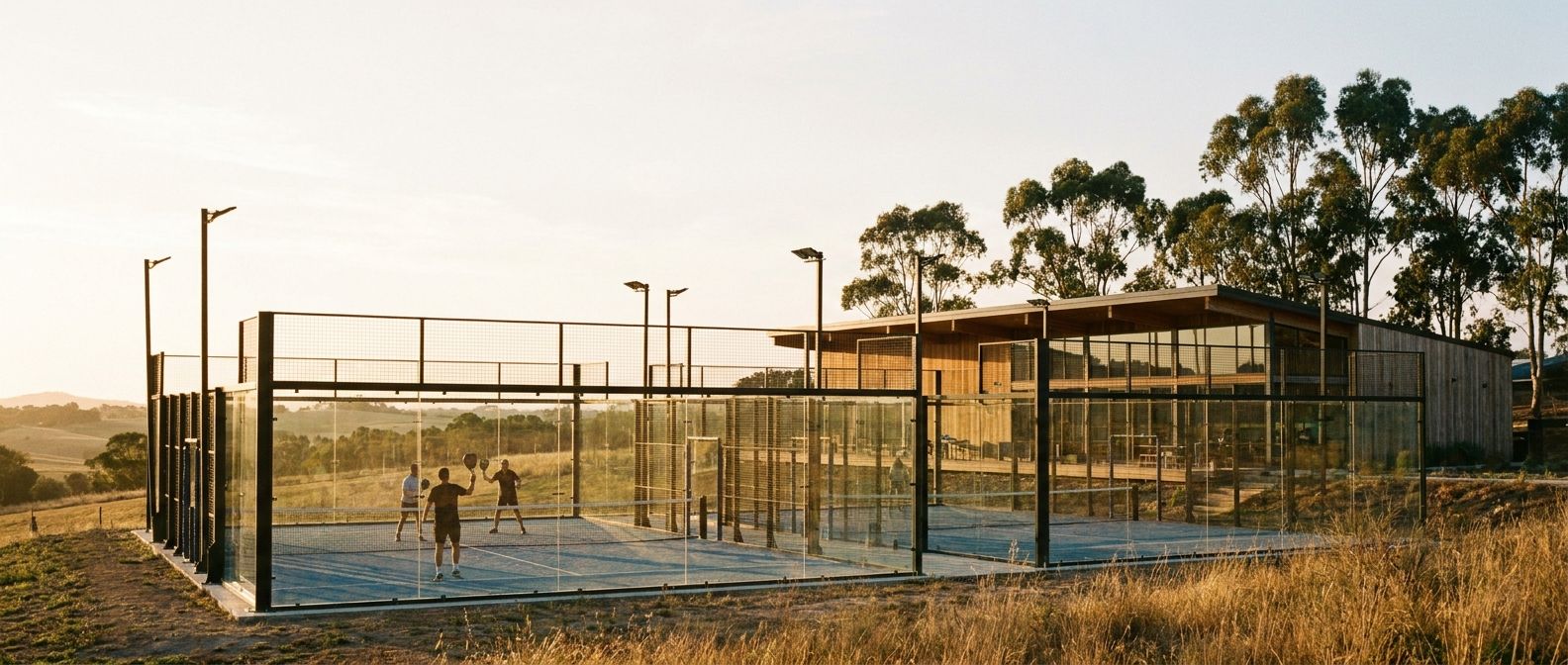
The International Padel Federation and Premier Padel have formally recognised 20 October as World Padel Day, turning a date the sport's own community had already adopted into an official one. The announcement, made in Lausanne on 20 October 2026, came with a second message: the federation is renewing its campaign to get padel into the Brisbane 2032 Olympic Games.
No decision on Olympic inclusion has been made, and padel is not currently part of the Brisbane programme. What the federation has done is package its growth figures, its competition structure and a new promotional film into a single argument, timed to land while the International Olympic Committee works through the 2032 programme.
What was actually announced
Two things, and it is worth separating them. First, FIP and Premier Padel officially recognise 20 October as World Padel Day. The date was already widely used by clubs and national associations, so the change is one of status rather than of calendar.
Second, FIP restated its Olympic ambition, arguing that padel offers a global participant base, equal billing for men's and women's competition, and a compact event format built on temporary, modular courts. Luigi Carraro, the federation's president, framed it in terms of the host city: padel, he said, can bring Brisbane 2032 "a global community, exciting competition for women and men, and a sport that people can discover and continue playing long after the Games."
The federation also released a campaign film closing with the line that padel is "ready for Brisbane 2032." That is advocacy, not news of a decision, and readers should treat it as such.
The numbers FIP is putting forward
The campaign leans heavily on the FIP World Padel Report 2026, published on 14 October. According to the federation's research, around 40 million amateur players now play padel in 191 countries and territories, with women making up 47 per cent of participants and more than 91,000 courts in use worldwide.
The report also sketches a pathway from grassroots to elite level: junior competition on the FIP Promises circuit in 36 countries, the CUPRA FIP Tour in 59 host countries, and the Premier Padel tour at the top, carried by broadcast partners in 244 territories.
Alongside the participation data, FIP published an economic study produced with the consultancy OpenEconomics. It estimates the global padel industry generates €6.84 billion in annual expenditure, €13.07 billion in economic output and more than 235,000 jobs, with a total contribution to global GDP put at €8.6 billion for 2026. FIP's headline formulation is that every euro spent on the sport generates €1.26 in GDP.
Why the figures need context
Participation estimates for padel vary widely depending on who is counting and what they count. The annual Global Padel Report published in May by booking platform Playtomic and Strategy&, the consulting arm of PwC, put the worldwide court total at 58,334 at the end of 2025 after roughly 8,000 additions that year, with about 20,900 clubs and 19.4 million players.
That is a long way from 91,000 courts and 40 million players. The gap is best explained by methodology rather than by either side being wrong: federations count through national associations and include casual and one-off participants, while commercial reports tend to count bookable facilities and registered users. Both sets of numbers point in the same direction, which is rapid growth from a small base, but neither should be read as a precise census.
The Olympic route is not a straight line
The IOC has spent the past two years reworking how the Olympic programme is decided, moving to an evaluation of disciplines rather than whole sports. In June 2026 the IOC Session approved the new methodology, and in August the IOC informed recognised international federations of how candidate disciplines would be considered for Brisbane 2032.
The rules outlined then are narrow. Federations responsible for disciplines already in the Brisbane host contract may propose one additional discipline. Other recognised federations are eligible only if their discipline featured at Tokyo 2020, Paris 2024 or Los Angeles 2028 through an organising committee proposal. The Brisbane 2032 organising committee can also put forward additional disciplines of its own, within a cap of four for a Summer Games.
Padel has not appeared at any of those three Games, which means its most plausible route runs through the Brisbane organisers rather than through an automatic entitlement. FIP's campaign, read plainly, is an argument addressed to both the IOC and the local organising committee.
There is also a scheduling reality. The IOC has said the full Brisbane programme, including initial sports, disciplines and any additional sports, will be finalised as a single package, and that the approach for 2032 is tailored to its existing timeline. Until that package is settled, any statement about padel's Olympic status is a hope rather than a fact.
The Australian dress rehearsal
FIP has been building its case in the host country. On 15 and 16 August, Padel Australia, Premier Padel and FIP staged an invitational on a temporary court at the Sydney Opera House, with international players, local club competitors and the former Australian tennis player Pat Rafter taking part.
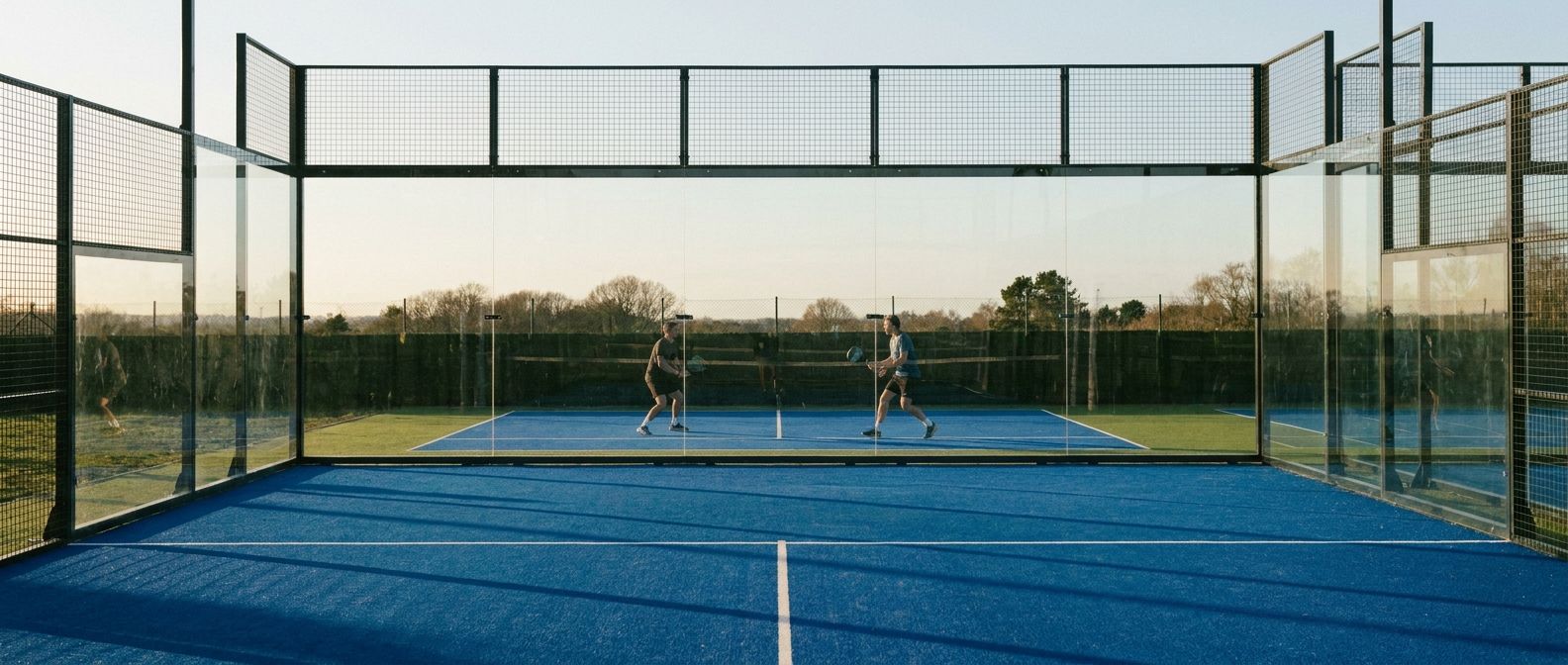
The point of the exercise was logistical as much as promotional: a court assembled on a landmark site, then removed, is the federation's answer to the objection that new sports require expensive permanent venues. Padel has also been accumulating multi-sport experience. It appeared at the 2023 European Games, and it featured at this month's Asian Games in Aichi-Nagoya, where Qatar won the first padel gold medal.
What inclusion would change for club players
Olympic status would not build a single court by itself, but it tends to move money. National Olympic committees and sports ministries generally direct funding towards recognised Olympic disciplines, and national federations use that recognition when applying for public facilities, coaching programmes and youth schemes.
The more concrete effect would be on the pathway. A Games place gives juniors a visible destination and gives national associations a reason to formalise selection, coaching and competition structures. For club players, that usually shows up indirectly: more qualified coaches, better-organised junior sections, and a stronger case for indoor courts in countries where weather limits outdoor play for half the year.
It would also raise expectations the sport has to meet. Padel's growth has been driven largely by private operators building courts where demand already exists, often in cities with high incomes and expensive land. Olympic inclusion would push federations towards regions where the commercial case is thinner, and not every expansion will pay for itself.
What to watch
Three things are worth tracking over the next year. The first is whether the Brisbane 2032 organising committee names padel among the disciplines it proposes to the IOC. The second is the IOC's final programme package and its timing, since the decision will be taken as a whole rather than sport by sport.
The third is whether padel's participation numbers keep climbing in the markets that acquired courts most recently. Growth in Britain, Germany and the United States has been fast, and the sport's case to the Olympic movement rests on the claim that this is durable demand rather than a construction boom.
For now, World Padel Day is official, the federation's campaign has a date to rally around, and the Olympic question remains open. FIP's own framing is the most accurate summary available: the sport is making its case, and the decision belongs to someone else.