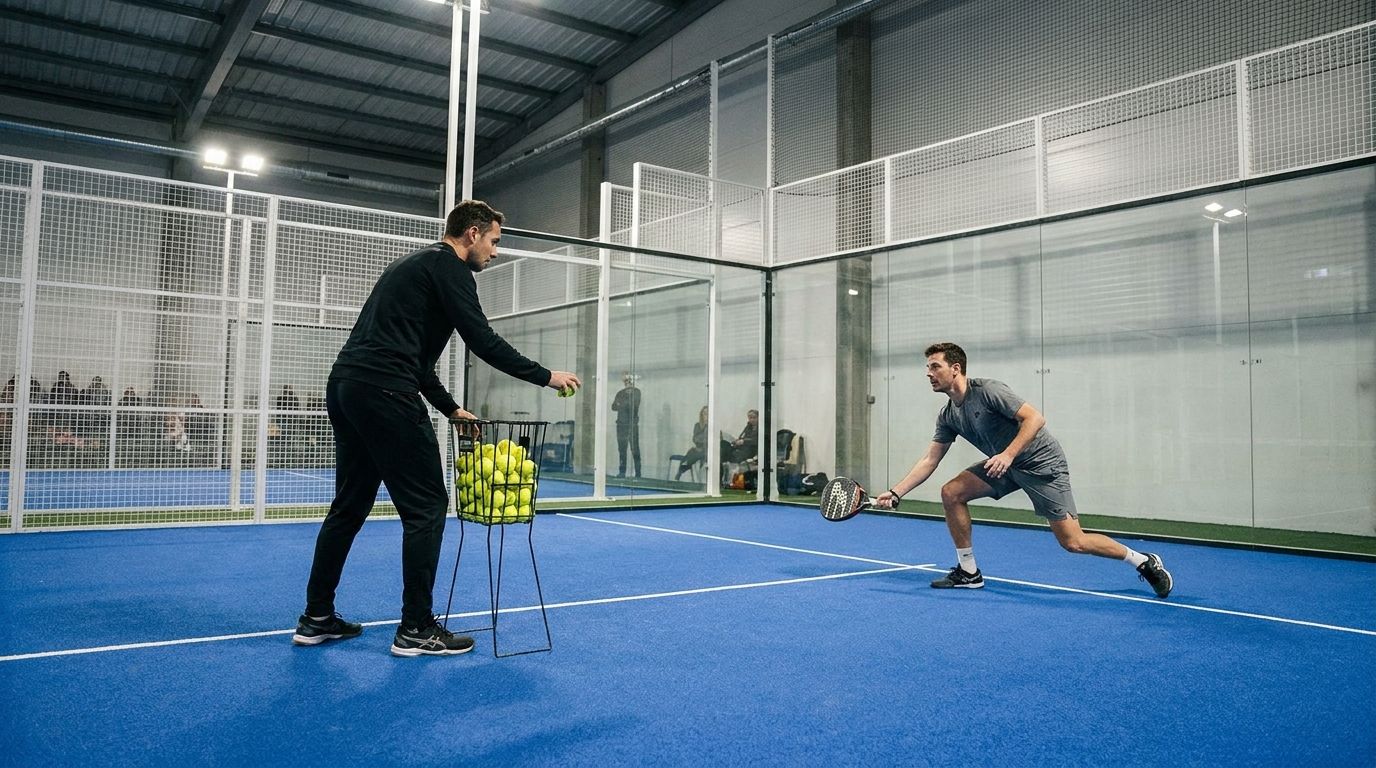
Most club players improve in bursts and then stall. They play three times a week, get fitter, learn the rules, and then spend two years making the same handful of errors. The reason is rarely talent. It is that match play is a terrible teacher: it gives you thirty different problems in an hour, and no chance to solve any of them.
Padel training works when it is narrow. You pick one or two behaviours, isolate them until they feel boring, then force them into live points. What follows is a weekly structure you can run on a single court booking, with or without a coach, sized for players who have a job on Monday.
Why Practice Usually Fails to Transfer
A drill that lives only in a drill is worth very little. If you spend forty minutes feeding each other gentle balls to the backhand, you will get excellent at gentle balls. In a match, the ball arrives lower, faster, and off glass, and the skill evaporates.
The fix is to end every session with the skill under pressure. Whatever you rehearsed, play points where that shot is the only way to win the rally. Two minutes of conditioned points is worth more than twenty minutes of tidy feeding.
The second reason practice fails is volume of attention. Four things to remember on court means you remember none of them. Pick one cue per session. "Watch the ball off the glass." "Turn sideways before the bounce." That is the whole session.
Start With the Shots That Decide Club Matches
Club padel is decided by a small set of situations. You serve, you return, you deal with a ball off the back glass, and you try to keep the net. Whoever handles those four moments better wins, regardless of how good their smash looks on Instagram.
So the training priorities, in order, are the serve and return, the transition from back of court to net, the bandeja as a control shot rather than a weapon, and reading the ball off the glass. Everything else is decoration until those are reliable.
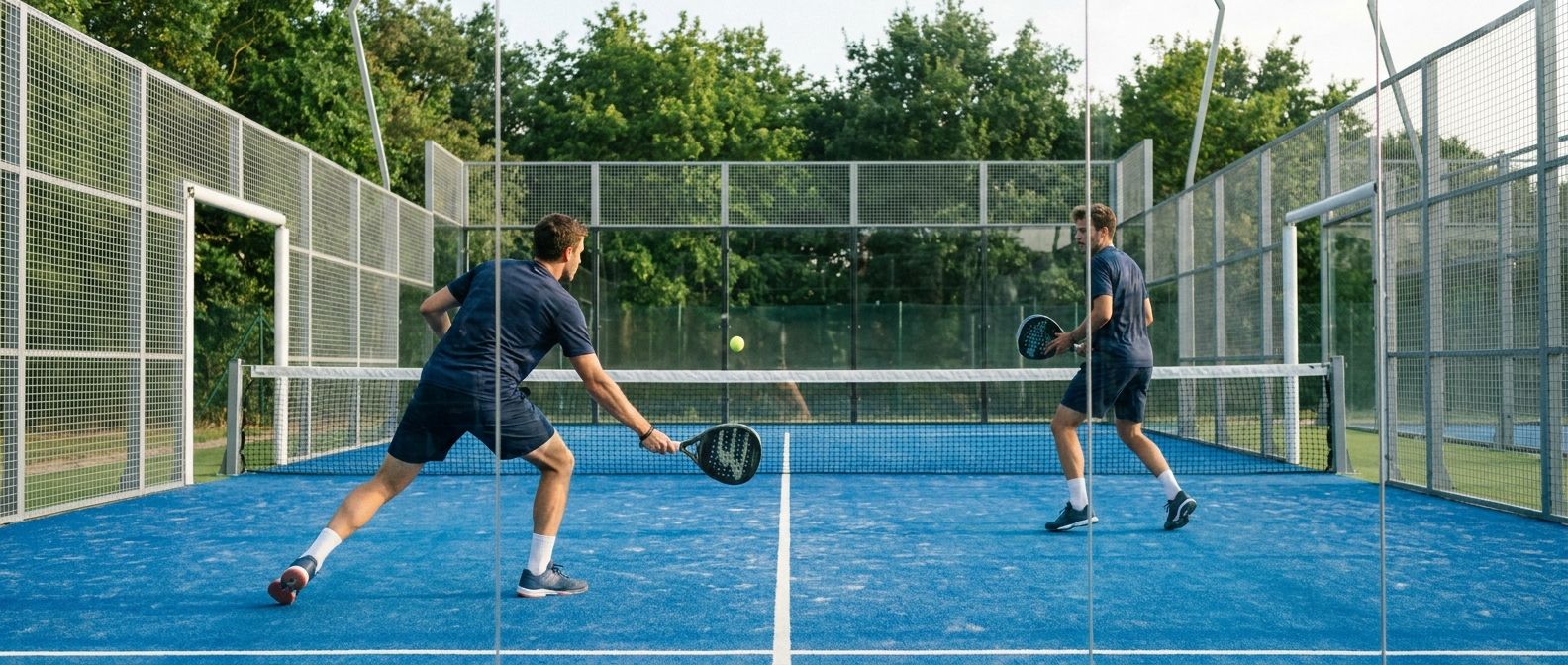
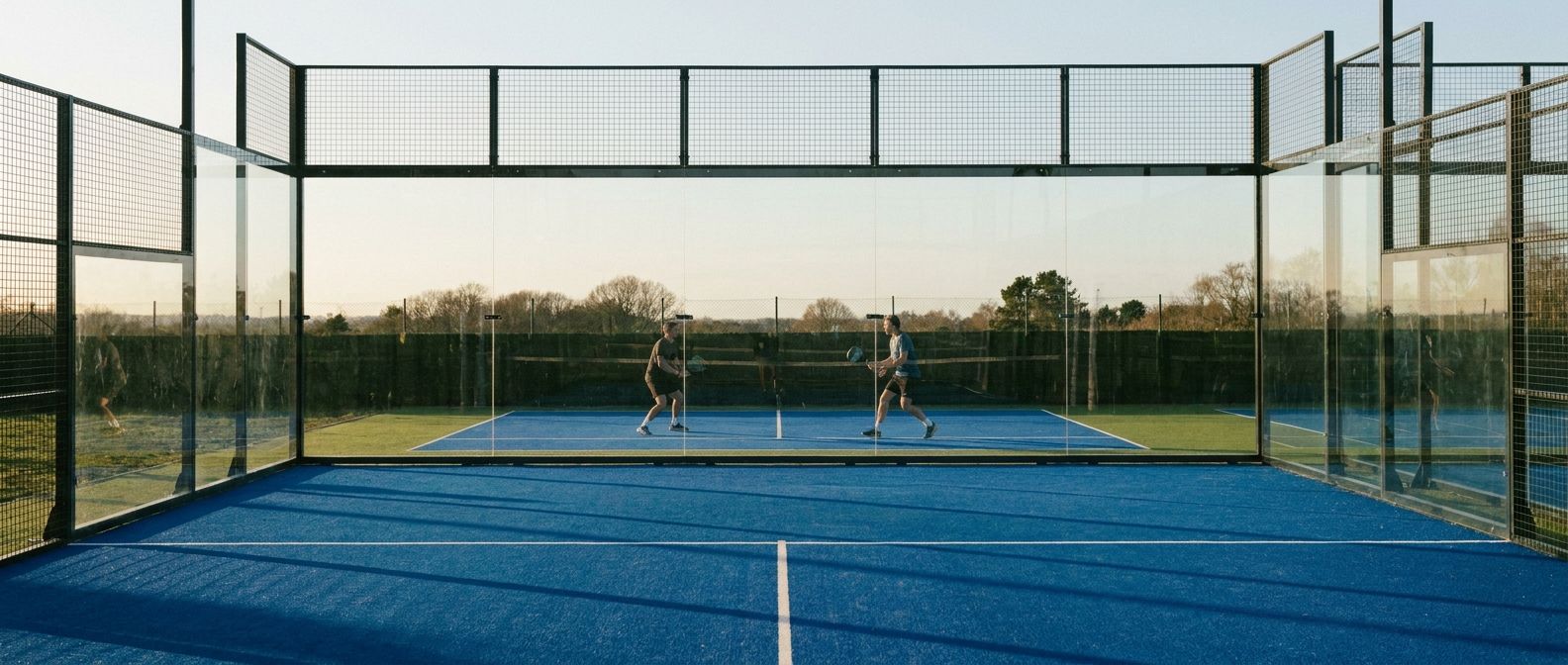
For reference, the space you are working in never changes. The court is 20 metres long and 10 wide, the net is 0.88 metres at the centre and 0.92 at the posts, the back glass stands three metres high, and the service line sits about three metres from the back wall. That is a small box with a lot of wall in it. Training should reflect how often the walls are involved.
The Weekly Template
Three sessions a week is plenty for an amateur, and they should do different jobs rather than repeat the same hit.
One solo or two-person session on mechanics and footwork, one structured partner session with targets and patterns, and one session of conditioned points. If you only manage two, keep the partner session and the conditioned points, because those are the ones that survive into a match.
Keep sessions to 45–60 minutes. Fatigue destroys technique faster than it builds character, and the last fifteen minutes of a tired session usually install the bad habits you spend the next week undoing.
Session One: Wall, Feet and Repetition
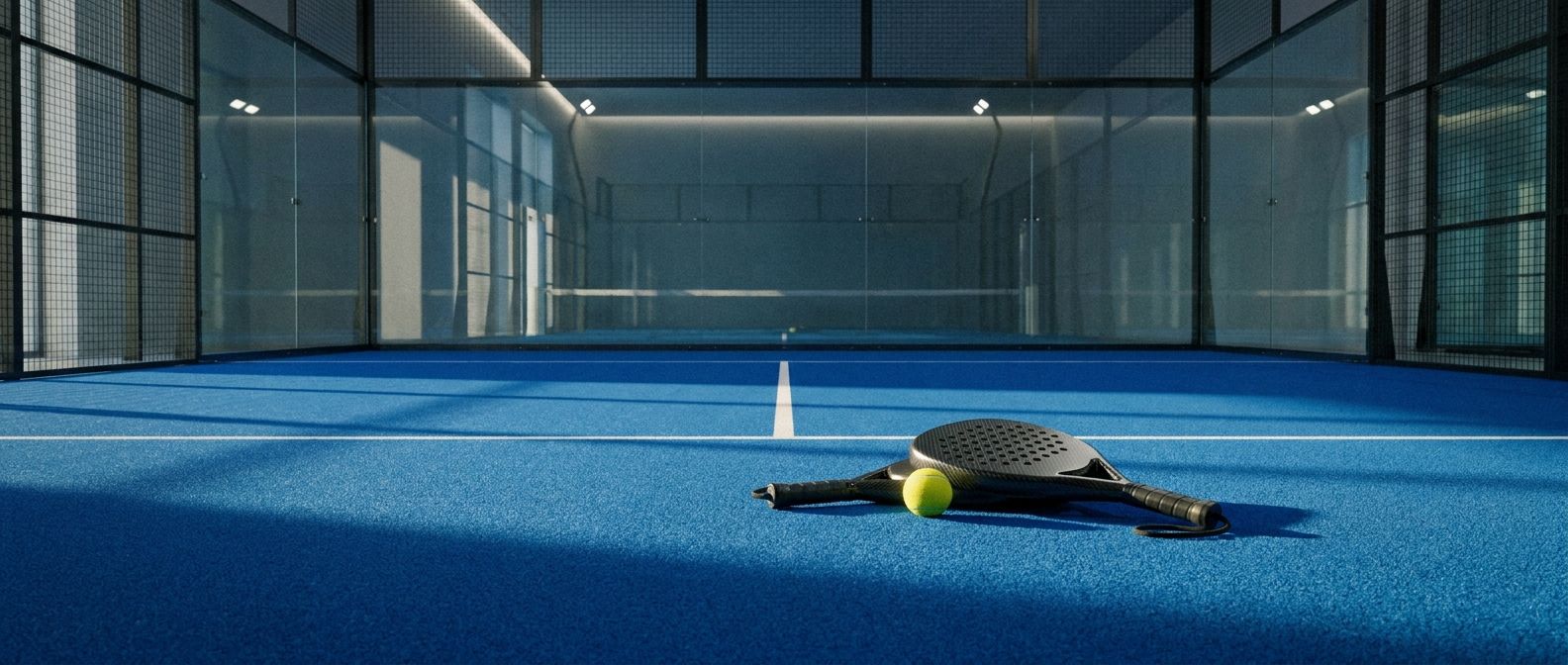
This is the session you can do alone, and the one most players skip. Book a court for an hour, bring a bucket of balls, and treat the back glass as your training partner.
Start with the ball off the back glass. Stand near the service line, hit a ball into the glass so it comes back over your side, let it bounce, and play it back into the glass. The goal is not power. It is to arrive early, turn your shoulders, and contact the ball in front of your hip rather than beside it. Ten minutes of this teaches more about glass than an hour of match play.
Then work the transition. From the back corner, play a controlled shot down the line and move forward two steps. Reset. Repeat. The habit you are building is that a good defensive shot is a signal to advance, not an invitation to admire it.
Finish with footwork, because padel is mostly a movement sport with a racket attached. Short split-step, sideways shuffle, and a first step that goes back rather than across. Do it for eight minutes, slowly, without a ball. It is dull. It also fixes the most common amateur error: arriving at the ball already off balance.
Session Two: Partner Drills With a Target
These are the padel drills worth the court time, and they have a scoreboard, even if the scoreboard is a cone. Put a target in a corner and count how many of ten attempts land in it. Numbers make practice honest.
The first pattern is the bandeja. Feed a lob, let your partner play the bandeja from the net area, and require it to land beyond the service line and near the side glass. The bandeja is not a smash. It is a shot that keeps you at the net while making the opponent's next shot difficult. If the ball is going short and sitting up, you are hitting it too flat and too hard.
The second pattern is the return of serve. Server serves, returner plays cross-court to the glass, and the pair play out the point with the rule that the returner must reach the net within three shots. This is the single most useful drill for club players, because it converts the two hardest moments of a point into one habit.
The third pattern is the chiquita, the low ball to the feet of the net players. Feed a mid-court ball, and require a soft, dipping shot rather than a drive. Ten of those, then switch roles.
Session Three: Conditioned Points
Conditioned points are normal points with one constraint. Serve plus return only, and the point stops after four shots. Or: the net pair may not smash. Or: every point starts with a lob. The constraint forces the skill you trained into a live situation.
Play first to eleven, then change the rule. Keep the constraints short and specific, and keep talking between points, because the value here is noticing what broke, not winning the game.
This is also where you learn to lose properly. A conditioned point that ends because you tried the new thing and missed is a successful repetition. A point won by reverting to old habits is not.
Fitness That Actually Helps
Padel rewards legs more than shoulders. The players who fade in the third set are usually the ones who cannot repeat a lateral push or a split step, not the ones who cannot bench press.
Three things are worth the time. Calf and ankle strength, because the court surface and the constant direction changes load them hard. Single-leg work, because every lunge is a single-leg movement. And short repeated efforts, such as six seconds hard, forty seconds easy, repeated ten times, which is roughly the rhythm of a long rally.
Skip the long slow runs. They build a base but they do not build padel. Twenty minutes twice a week of the three items above will change how you feel in the second hour of a session.
What to Measure
Improvement in padel is invisible unless you write it down. After each session, note one number and one sentence. The number can be targets hit out of ten, or unforced errors in a set of conditioned points. The sentence is what actually went wrong.
After four weeks, look back. If the number has not moved, the drill is wrong, not you. Change the constraint, make it easier, and rebuild. If the number has moved but matches have not, the skill is not yet under pressure, and you need more conditioned points and fewer feeds.
A Four-Week Ramp
Week one is diagnosis. Play your normal games, note the three errors that cost you the most points, and pick the worst one. Week two is isolation, with the first session built entirely around that error. Week three adds the pressure, replacing half of session two with conditioned points that punish the old habit. Week four is consolidation, with one session of maintenance and two normal matches.
Then pick a new error and start again. That is the whole cycle. It is not glamorous, and it does not photograph well, but it is the difference between a player who has been playing for five years and a player who has improved for five years.
The Habit Behind the Plan
The players who get better are not the ones with the most court time. They are the ones who arrive with a specific intention and leave knowing whether it worked. A single court booking a week, used deliberately, beats five casual games.
Book the court, bring a bucket of balls, choose one cue, and give yourself a number to beat. The rest follows.