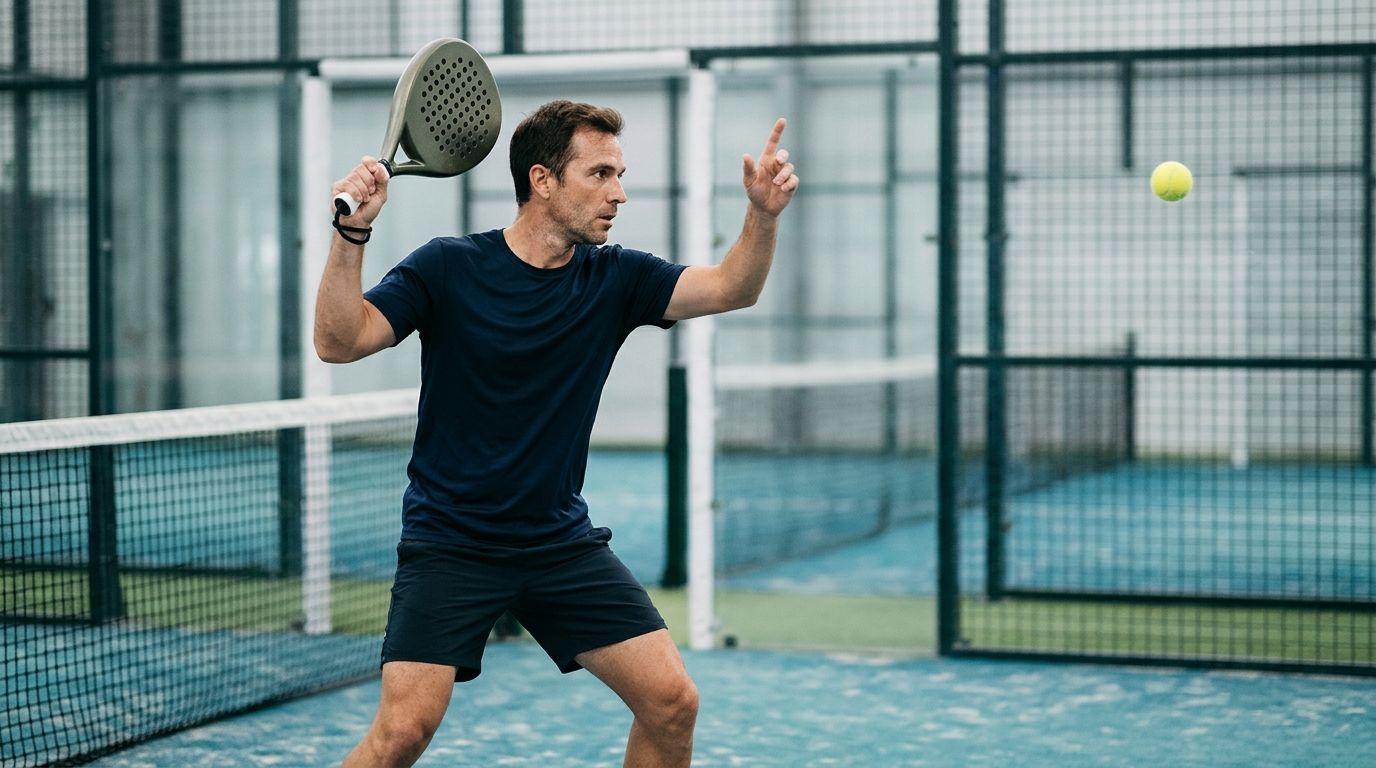
A víbora can look like a winner: a sharp overhead, cut across the ball, skidding toward the side glass. But its best use is not simply to hit harder than a bandeja. It is a controlled way to make a reachable lob uncomfortable while keeping your pair in an attacking position.
For club players, the shot works when three things line up: you read the lob early, arrive balanced, and choose a target that leaves time to recover. If one is missing, a safer bandeja—or letting the ball bounce and defending together—is usually the better decision.
What the víbora is for
The víbora is an attacking overhead played from the net position against a lob that you can reach in balance. Compared with the bandeja, it is generally struck with more pace and a brushing action across the outside of the ball, adding sidespin to the slice. Its purpose is to put the defenders under pressure, not to guarantee an immediate point.
That distinction matters. A fast ball hit from a poor position often rebounds comfortably off the back glass or leaves the hitter stranded. A well-placed víbora can keep opponents low, make the rebound awkward, and give your pair time to close forward again.
Think of it as a variation within a larger overhead decision. A short lob in front of you may invite a smash. A reachable lob that lets you set your feet can suit the víbora. A deeper or awkward lob is more likely a bandeja or a retreat to defend. The shot should serve the rally, not your desire to show a particular technique.
Start with the lob, not the swing
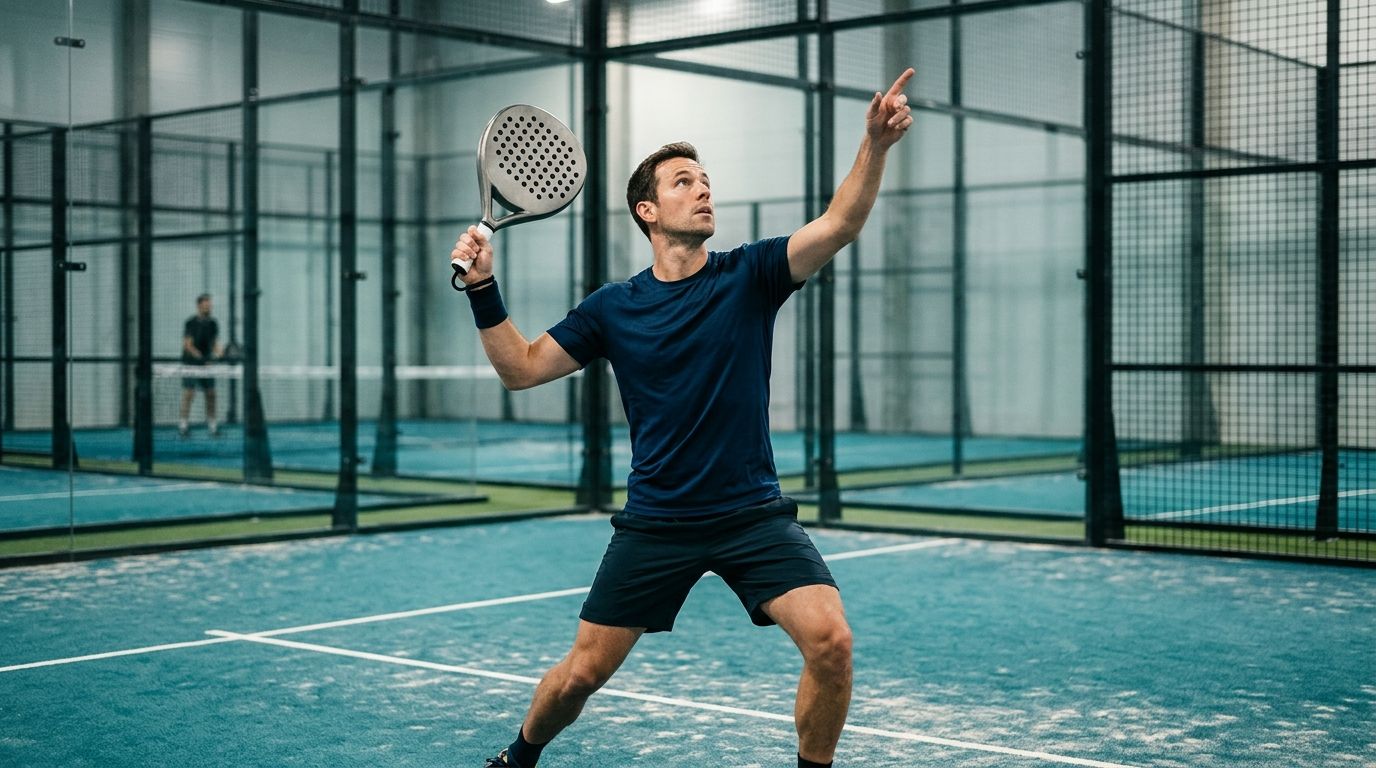
The first skill is reading the ball. As soon as your opponents lift it, turn your shoulders side-on and move back early. Keep the racket prepared rather than letting it drop behind you, and use your non-racket arm to help judge the ball’s height and line.
Small adjustment steps are more useful than a last-second sprint. Try to get behind the projected contact point, with enough room to swing without leaning or reaching. If you are still moving hard when the ball arrives, reduce the ambition: play a controlled bandeja or allow the ball to bounce if that is the sounder defensive choice.
A simple test is whether you can pause briefly under the ball and feel balanced. If not, you probably do not have the position for a high-risk víbora. Good overheads begin with footwork that makes contact repeatable.
Contact in front and to the side
Many players use a continental-style grip so they can vary overheads without changing their hand position. Raise the racket early and turn sideways, then contact the ball slightly in front of your hitting shoulder and somewhat out to that side. Avoid letting it drift behind your head; that makes control and shoulder comfort harder.
For the víbora, brush across the outside of the ball with a compact, controlled action. The racket travels across the body, producing slice and sidespin rather than a purely flat hit. You do not need a huge backswing. A shorter action is easier to coordinate, especially when the lob is not perfectly placed.
Do not force the wrist to manufacture spin. Keep the movement comfortable and let the racket path do the work. If your shoulder hurts, stop and seek qualified coaching or medical advice rather than repeatedly practising through pain.
Choose a target that gives you time
Aim with a reason. A deep ball toward the side-glass corner can create a difficult rebound; a deep ball through the middle can cause hesitation between opponents. At many levels, the middle is valuable because it reduces the defenders’ angles and makes communication harder.
The key word is deep. A short víbora that lands near the service line may sit up for an attacking reply. Do not chase the sideline at the cost of control. A slightly less spectacular ball that lands deep and makes the opponents hit from below net height is often more useful than a risky winner attempt.
Choose the target according to the defenders’ positions. If one opponent is already leaning toward the side wall, the middle may be safer. If both are guarding the middle, a controlled ball toward the side glass may stretch them. Watch the result and adjust rather than repeating the same target automatically.
Recover with your partner
The shot is only half the play. After contact, move forward promptly and rejoin your partner’s line. Do not admire the ball or charge blindly into the net. Your pair should advance together, staying close enough to cover the middle and communicating who takes the next ball.
If your víbora forces a weak reply, you may get a volley opportunity. If it comes back strongly, being balanced and moving as a pair leaves you better able to defend. The goal is to maintain pressure without opening a large gap between partners.
Before the point, agree on a simple call for the middle lob and who takes it. Clear communication prevents both players retreating for the same ball—or neither moving because each expects the other to go.
Víbora or bandeja? Make the choice early
The bandeja is usually the lower-risk option when your priority is to keep the net after a lob. It emphasizes a controlled, deep trajectory and a stable recovery. The víbora adds a more aggressive brushing action and can pressure opponents when you are well positioned, but it asks more of your timing and control.
Use the víbora when the lob is reachable, you have set up early, and you can contact the ball in front without losing balance. Choose the bandeja when you are late, drifting, or simply want a reliable way to send the ball deep. If the lob is too deep to attack safely, retreat with your partner and play the rebound off the glass.
These are decisions, not rigid rules. A skilled player may vary the shot based on the opponent, court conditions, and the quality of the lob. For a developing player, however, a dependable bandeja provides a sound base before adding more pace and sidespin.
Three focused drills
Shadow the movement. Without a ball, practise turning side-on, taking adjustment steps, setting the racket, and recovering forward. Work both sides of the court. The aim is a repeatable preparation, not speed.
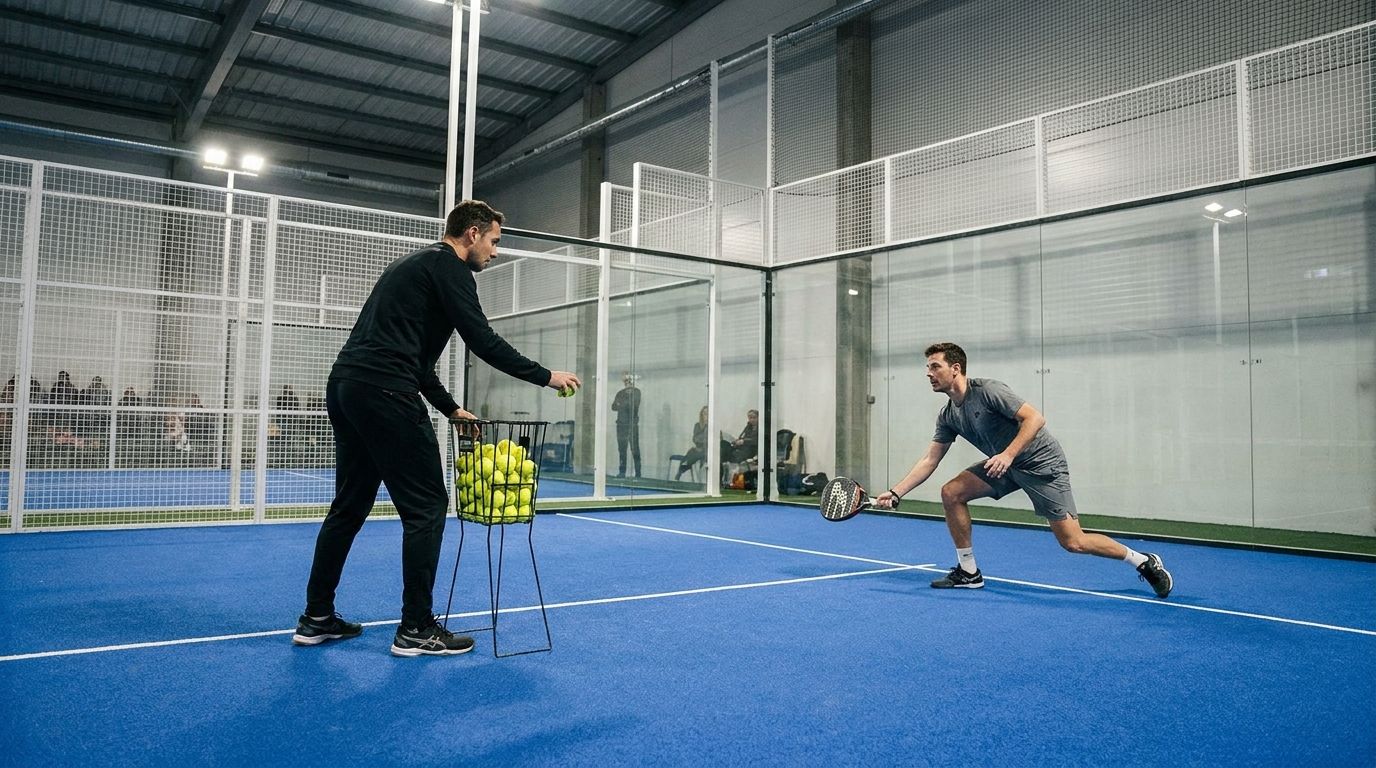
Feed reachable lobs. A partner or coach feeds moderate lobs to one side. Begin with a bandeja to a large deep target. Once contact and recovery are consistent, add the víbora at controlled pace. Keep the target wide enough that you can succeed without aiming for a line.
Make the shot a decision. Have the feeder alternate between a short, reachable lob and a deeper lob. Choose víbora only when balanced; otherwise use the bandeja or retreat together. Score the quality of the decision and recovery, not just whether the ball wins the point.
Stop a drill when fatigue makes your footwork sloppy. Repetition is useful only if it reinforces good positioning and a comfortable swing.
Common errors to correct
Trying to hit every overhead as a víbora is the quickest way to lose the net. Other frequent problems include waiting too long to turn, contacting the ball behind the body, swinging too hard, aiming too close to the sideline, and failing to move forward after the shot.
Change one thing at a time. If the ball floats, check the contact point and racket path before adding force. If you miss long, reduce pace or choose a deeper, safer trajectory. If opponents attack your reply, look at its depth and your recovery position—not only at the spin.
Build the shot in layers
A useful progression is straightforward: read the lob, move early, make clean contact, land the ball deep, then recover with your partner. Add extra sidespin and pace only when the first four pieces hold up under realistic feeds.
The víbora is not a badge of advanced play. It is one option for a particular ball. Used selectively, it can turn a defensive lob into pressure while helping your pair stay at the net. Used without balance or a plan, it simply gives the other team another ball to attack.