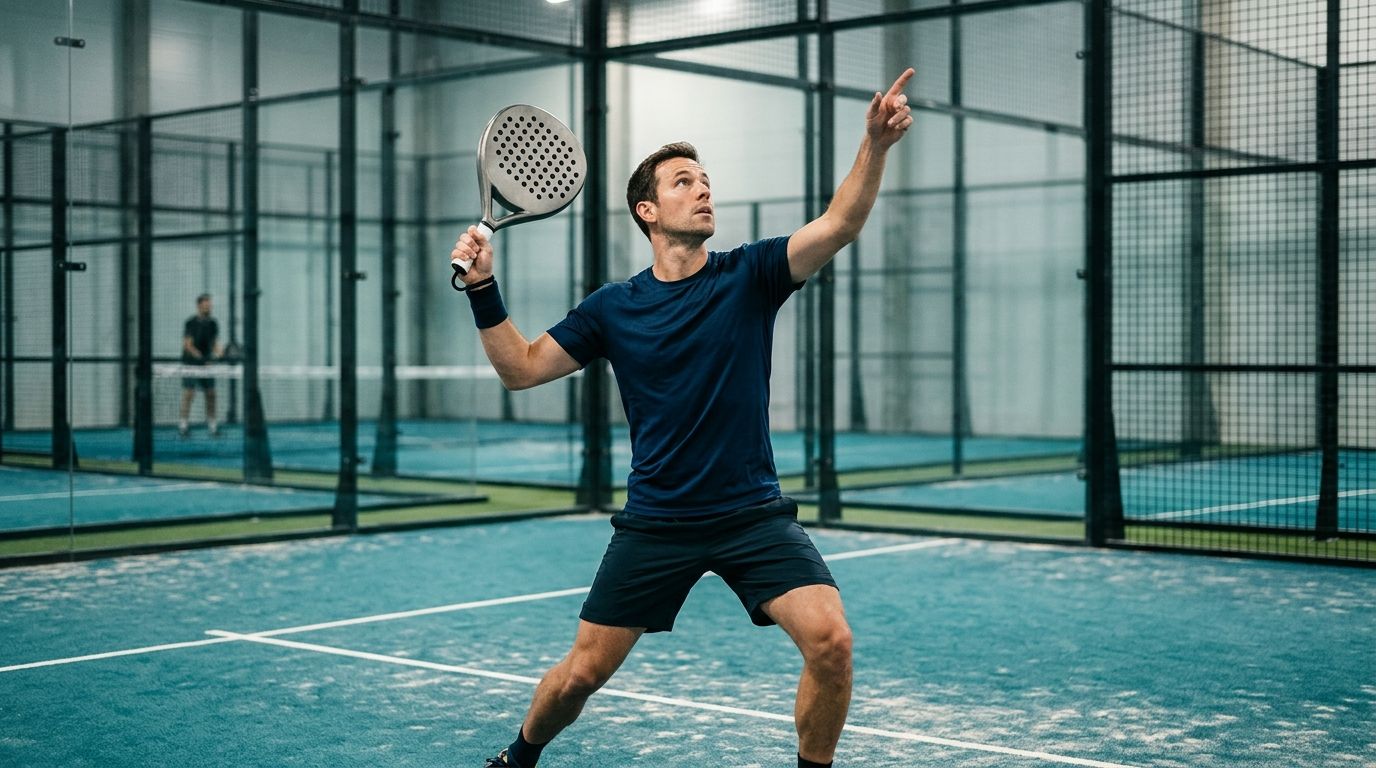
The bandeja is a position shot
When a lob sends you back from the net, the tempting response is to hit as hard as you can. That is often exactly what your opponents want. A rushed overhead can rebound high from the back glass, land short, or leave you stranded while they take the net.
The bandeja offers a more measured answer. Its name means “tray” in Spanish, a useful image for the relatively level racket preparation. You strike with control and slice rather than trying to finish the point. The aim is to make the next ball awkward while giving your pair time to reclaim the front of the court.
Think of it as a tactical sequence, not a single winning shot: read the lob, get behind the ball, play a deep and controlled reply, then move forward together. If the bandeja has done its job, your opponents are still defending and you are back in the stronger position.
Decide before you swing
The bandeja is a good default when the lob is deep or well placed and you can reach it before it bounces, but you are not balanced or close enough for a reliable attacking smash. It is also useful when your priority is to hold the net rather than gamble on a winner.
A short, high lob that leaves you balanced and moving forward may invite a smash. A slightly shorter ball can also create an opportunity for a more attacking víbora, provided you can contact it in front and control the direction. But if you are drifting backwards, reaching behind your head or unsure of your contact, choose the safer bandeja—or let a very deep ball bounce and defend it from the glass.
That choice is individual and situational. Court position, lob depth, balance and your partner’s position all matter more than trying to use the most impressive-looking shot. A conservative bandeja can be the aggressive decision if it preserves your pair’s net position and forces another difficult reply.
Turn early and make room
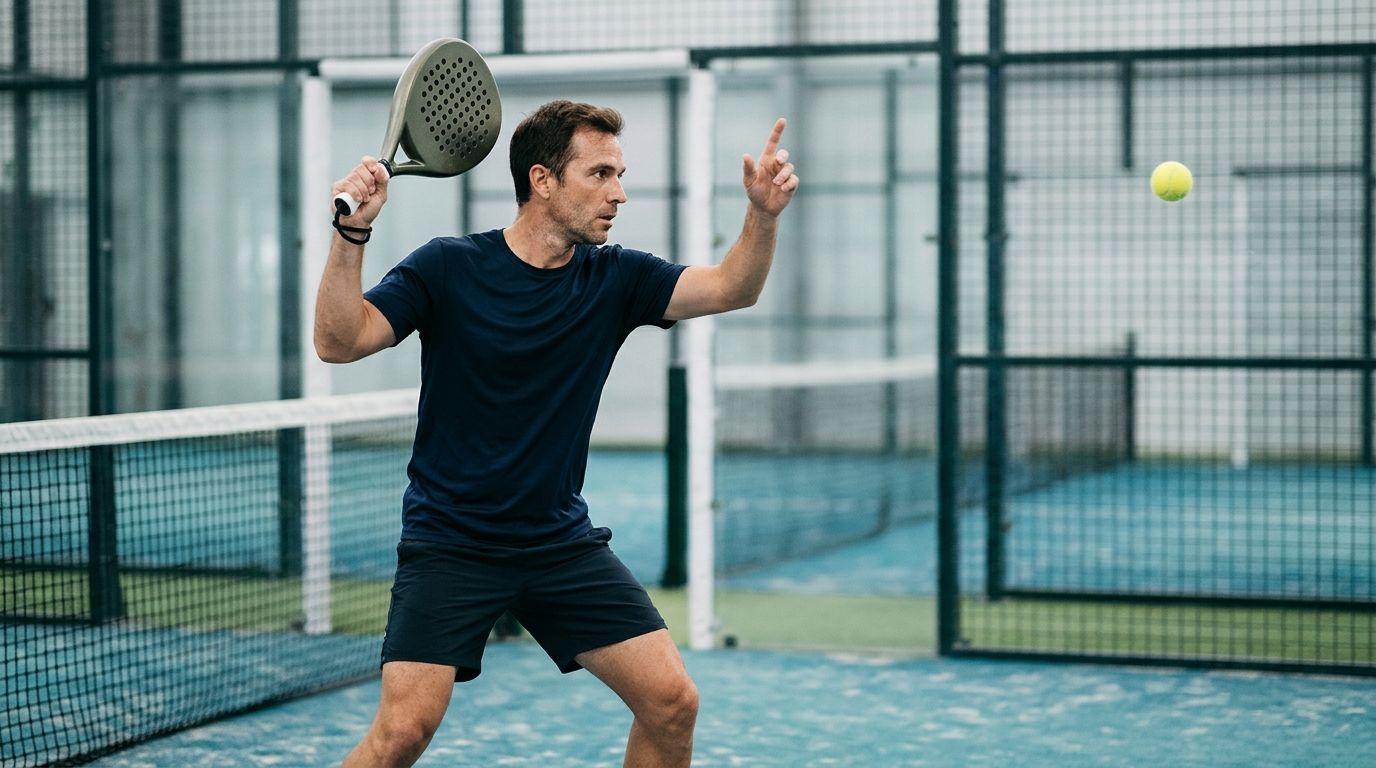
As soon as you recognise the lob, turn side-on and raise your racket. Do not retreat square to the net while watching the ball over your shoulder; that makes it harder to move and leaves little room to swing. Use controlled side or crossover steps to get behind the expected contact point.
Your non-racket hand can point toward the ball as you move. It helps you track its flight and keeps your shoulders turned. Aim to arrive early enough that you can settle, rather than swinging while still running backwards. If the ball is carrying you deep, communicate with your partner so you do not collide or leave an uncovered middle.
The key is to get the ball slightly in front of your hitting shoulder, not directly above or behind your head. If it has passed behind you, the shot becomes a rescue. Do not try to fix poor positioning with a bigger swing: recover the rally with a safer option if needed.
Use a compact, controlled contact
For a standard bandeja, begin with a comfortable overhead preparation and a relaxed grip. Coaches often recommend a continental-style grip because it supports volleying and a controlled, slightly open racket face without a dramatic grip change. Avoid squeezing the handle; tension makes it harder to judge touch.
Let the ball descend to a manageable contact height, commonly around eye level for a club player, and meet it in front of the body. Instead of driving straight down as if hitting a tennis smash, brush across and slightly under the ball with a compact high-to-low action. The slice should come from the racket path and clean contact, not an exaggerated wrist flick.
Keep the swing within your balance. You do not need maximum pace. A controlled ball with depth is usually more useful than a fast one that rebounds conveniently for the defenders. If your shot repeatedly sails long, reduce the force and check that the contact is in front. If it floats short, make sure you have moved behind the ball and are sending it deep rather than simply lifting it.
Choose a target that buys time
Depth is the first priority. Aim beyond the service line so your opponents have to play from farther back, rather than stepping into an easy volley. A deep corner can make the next shot awkward, particularly if the ball reaches the back or side glass at a low angle. Down the middle is another useful choice when both defenders might hesitate over whose ball it is.
Do not chase the lines before you can control length. A bandeja aimed too close to the side glass may miss or sit up if your contact is late. Start with a generous target zone in the back half of the court. Once you can repeat that ball, vary direction to keep opponents from anticipating it.
The result you want is not necessarily a spectacular rebound. You want a reply that is difficult to attack and gives your pair time to reset. Against defenders who handle the back glass well, a deeper, safer ball may still be the right play; change the direction or height rather than forcing more speed.
Recover as a pair
The shot is only half complete when the ball leaves your racket. Push forward promptly, but do not sprint blindly. Your partner should move with you so the pair closes the space together and can cover the middle. If one player advances while the other stays deep, the opponents can exploit the gap between them.
Watch the quality of your bandeja and the opponents’ contact. A strong, low reply may let you reclaim the net. If your shot sits up, be ready to defend rather than charging into a volley you cannot control. Use small adjustment steps as you approach the net, then settle into a balanced stance before the next shot.
A practical cue is “hit, recover, split”: play the bandeja, move forward with your partner, then split-step as the opponents are about to strike. The split-step keeps you ready to react in either direction. Returning to the front without balance is not a recovery; it is just another way to be late.
Three drills that build reliable habits
Start with shadow repetitions. Without a ball, practise turning side-on, raising the racket, taking a few controlled steps and finishing across the body. Keep the movement compact and balanced. This makes the setup familiar before you add the pressure of a live lob.
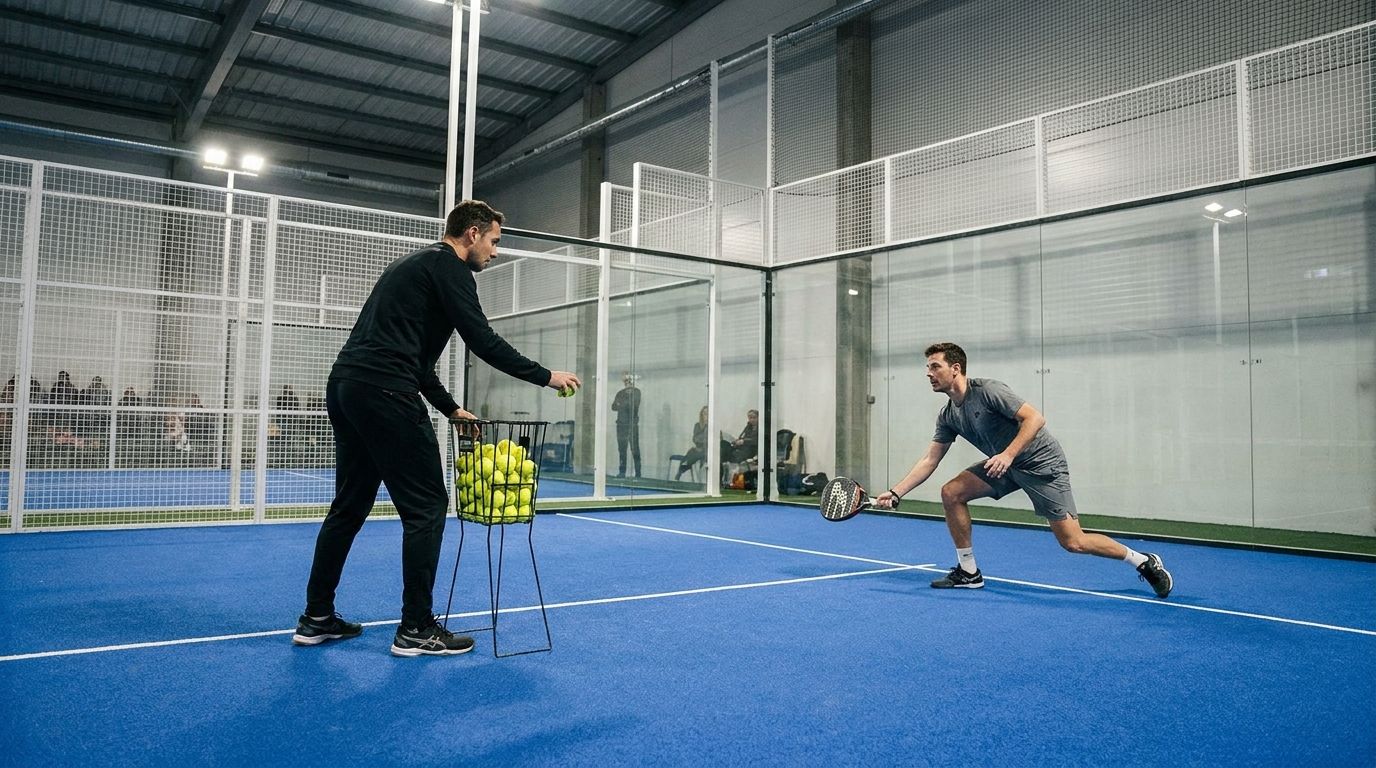
Next, ask a partner to feed gentle lobs while you stand near the net. Play at an easy pace and focus on contact in front, controlled depth and moving forward after the shot. Have the feeder vary the direction slightly so you learn to adjust your feet rather than reach with your arm.
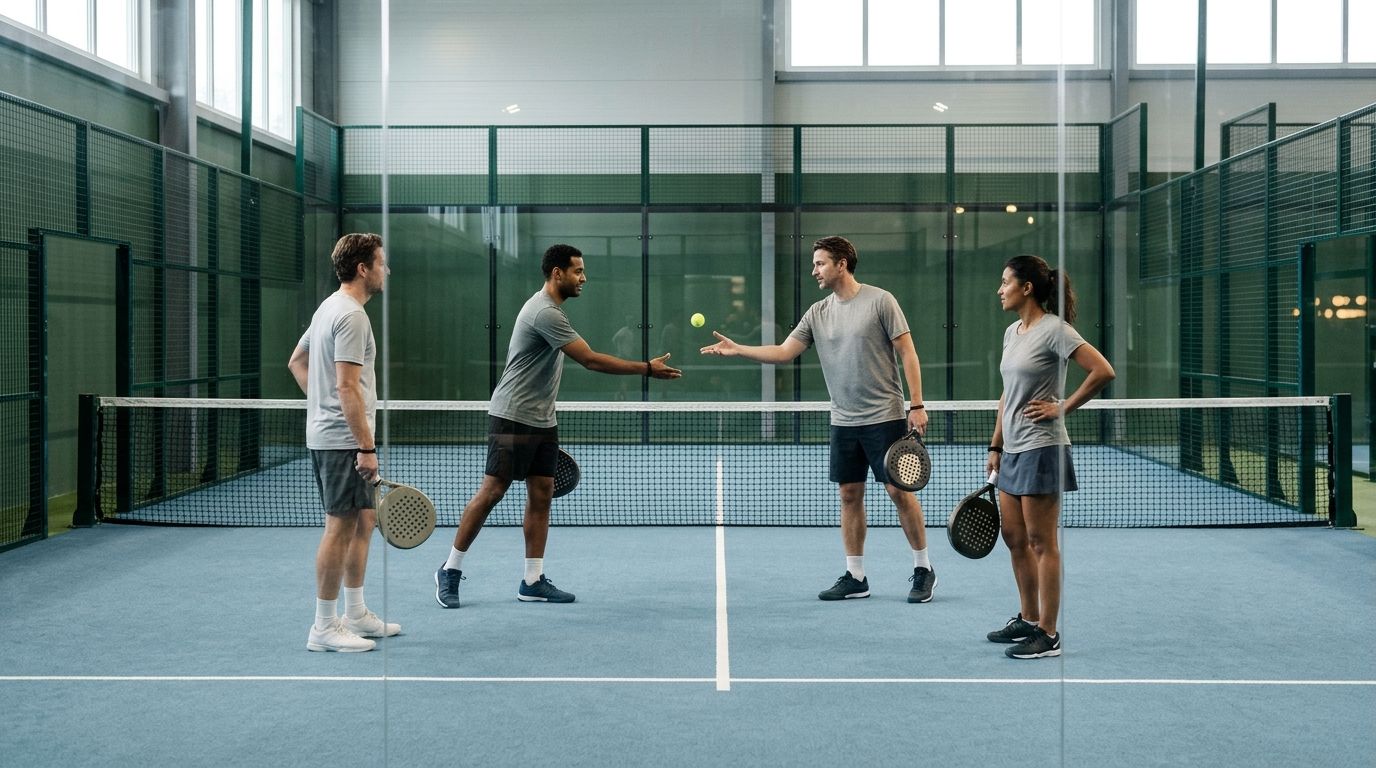
For a more match-like drill, have one pair at the net and one pair at the back. The back pair lobs; the net pair chooses a bandeja when appropriate, then both players recover together and play out the point. Rotate roles every few rallies. Score a point only when the bandeja lands deep and the pair returns to a balanced net position before the opponents’ next contact. This rewards the purpose of the shot, not raw pace.
Common errors and quick fixes
If the ball keeps flying into the back glass, you may be swinging too hard or contacting it late. Slow the stroke down, get behind the ball earlier and meet it in front. If it lands short, focus on moving your weight toward the target and sending the ball deep, rather than adding a sharp wrist action.
If your bandeja is easy to attack, check the recovery. Players often watch their shot instead of moving forward, giving opponents time to come in. If you keep losing balance, simplify the footwork and choose control over aggression. If the lob is too deep to reach comfortably, let it bounce and use the glass; there is no bonus for forcing a poor overhead.
Make the next ball the goal
A reliable bandeja does not have to end the rally. Its value is in making the opponents defend while your pair stays organised and returns to the net. Read the lob early, select the shot that suits your balance, aim for controlled depth and recover together. When those habits become consistent, you can add more variation—and reserve the riskier overheads for balls that genuinely invite them.