Learning how to serve in padel is less about raw power and more about a repeatable underhand motion that starts the point on your terms. Get the bounce, contact height and diagonal target right, and the rest of your game has room to grow.
This coaching-style guide also covers how to play padel better in the first months, with notes for anyone coming from paddle tennis for beginners contexts or searching how to play padel tennis with a clearer on-court plan.
The serve: bounce, height, direction
Stand behind the service line, bounce the ball, and strike underhand so contact stays at or below the waist. Send the ball diagonally into the opposite service box. You get two attempts; after a fault, reset your rhythm instead of muscling the second ball.
Aim deep into the box so the bounce rises toward the glass. That depth buys your team time to move forward together. Wide serves are useful later; first own a safe, deep cross-court ball.
Checklist before each serve
- Feet behind the line; decide the target before the bounce.
- Soft knees; racket face open enough to lift the ball.
- Contact below the waist; finish toward the target.
- Move in with your partner after a solid first bounce.
Returning: let it bounce, then decide
On return, the ball must bounce in the box before you hit it. Take the ball early when it sits up, or step back and use the glass when it is heavy and deep. Talk with your partner so one of you owns middle balls.
How to play padel better in the first three months
Prioritize consistency over winners. Keep the ball high and deep when you are defending, and look for short balls before attacking. Most improving pairs win by forcing errors, not by blasting every overhead.
At the net, keep the racket up and the elbows soft. Volleys should redirect pace more than create it. When you are pushed back, a calm lob that clears the attackers and lands deep is often the reset you need.
Walls and glass are teammates, not obstacles
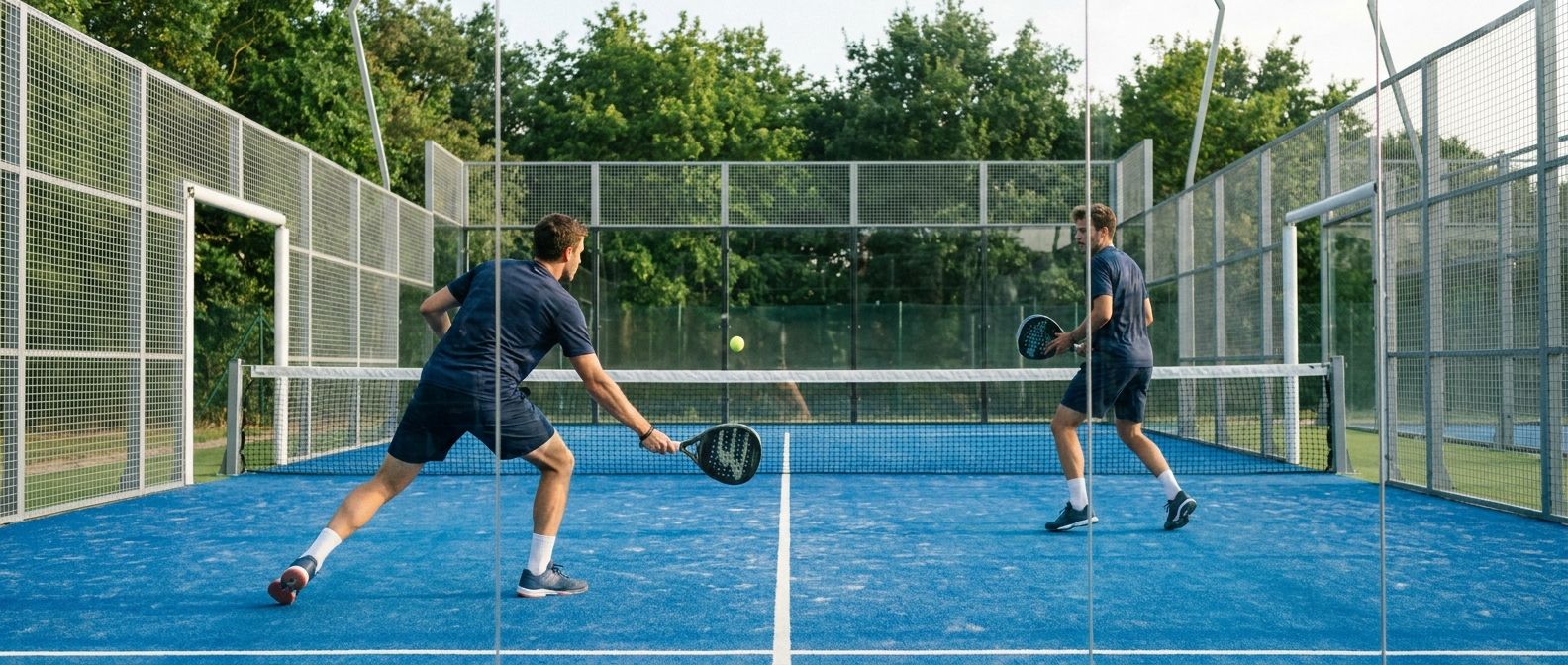
After the bounce, you may play the ball off the back glass or side wall. Practice feeding yourself off the glass until the rebound timing feels normal. That skill separates padel from open-court racket sports and is essential if you want to understand how to play padel tennis in real matches.
Notes for paddle tennis for beginners
If you arrive from platform or paddle tennis traditions, expect a different ball flight and a stronger emphasis on the glass. The underhand serve and closed court change geometry: patience and partner spacing matter more than a big flat drive.
Transfer what you can—anticipation, soft hands at net—then deliberately retrain serves and defensive glass balls until they feel automatic.
A simple practice block you can repeat
- 10 serves each: deep middle, then deep wide.
- Cross-court rallies from the service line without finishing.
- Lob-and-bandeja patterns at 50% pace.
- Two short sets focusing only on first-serve percentage.
Court time beats theory
Book sessions close together so footwork and serve timing stick. Find courts on PadelMap, skim more guides on the blog, and when equipment questions come up, compare frames in the rackets section.
Doubles movement that makes serves stick
After you serve, both players should ease forward together instead of one charging alone. The server typically takes a line slightly toward the middle; the partner mirrors on the other half. If the return is deep and heavy, do not freeze mid-court—decide early whether to volley or retreat and rebuild.
Communication cues help: a quick call of “mine,” “yours,” or “bounce” prevents collisions. Improving how to play padel better is often less about new strokes and more about these shared habits on every point.
Building confidence under mild pressure
Play short sets where the only goal is first-serve percentage above sixty percent. Another day, ban winners for twenty minutes and allow only depth and height. Constraints force cleaner decisions and make the underhand serve feel like a tool rather than a nervous ritual.
Film one game from behind the server. Check contact height, foot faults, and whether you recover to a ready position. Small corrections from video beat vague advice after a random club night.
Stay patient. Everyone’s first months include awkward glass bounces and mistimed volleys. Keep the checklist short, book regular courts, and let repetition do the quiet work of turning beginners into steady doubles partners.
Carry this onto court
Know how to serve in padel with a calm underhand motion, chase consistency when you want to play padel better, and treat glass defense as a core skill. Whether you call it padel or grew up with paddle tennis for beginners materials, the path is the same: clear targets, patient defense, and shared movement with your partner.