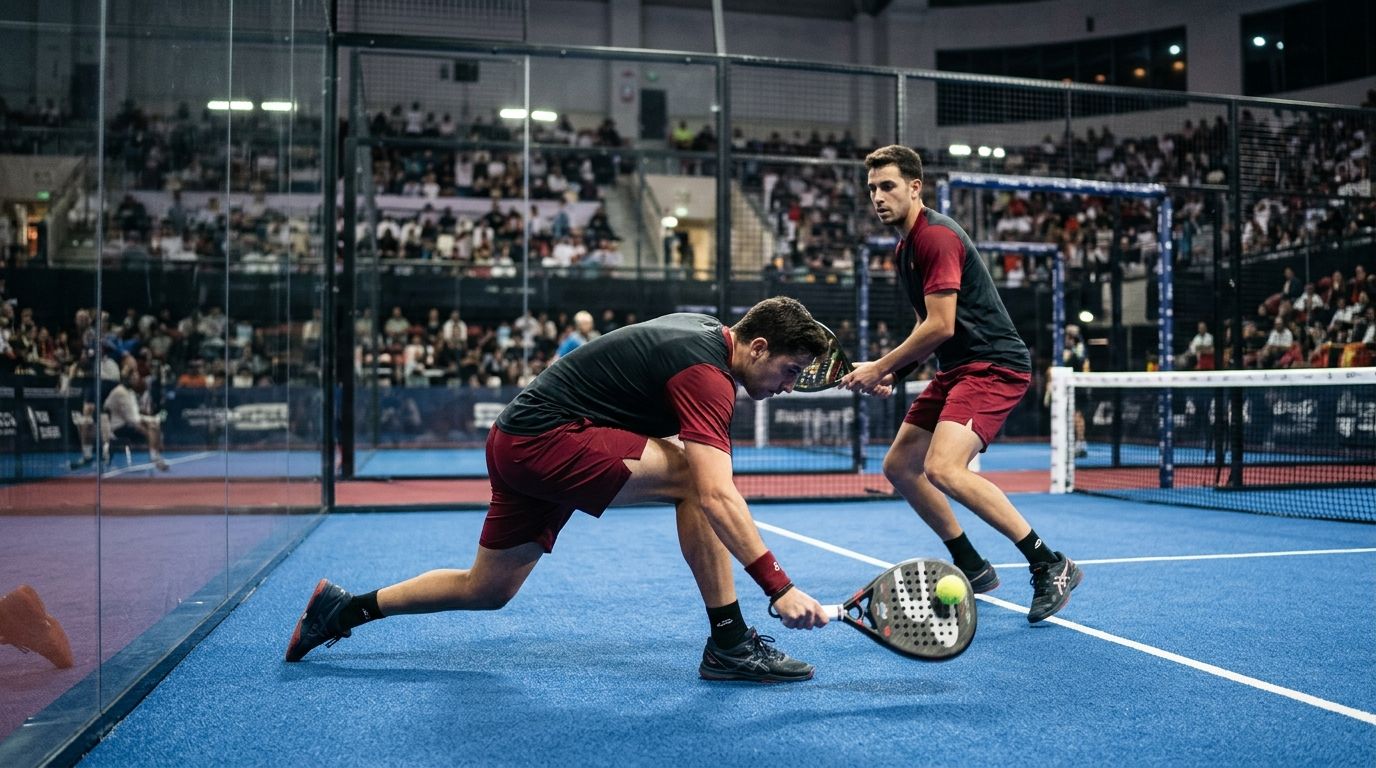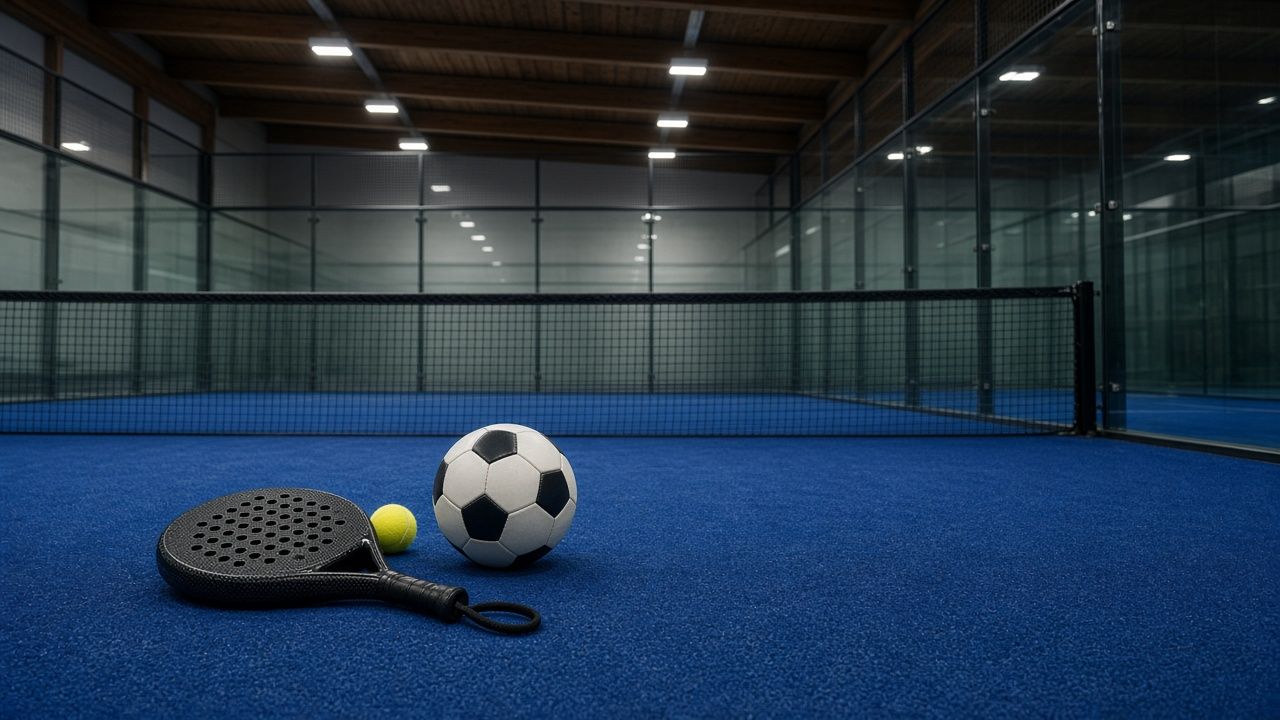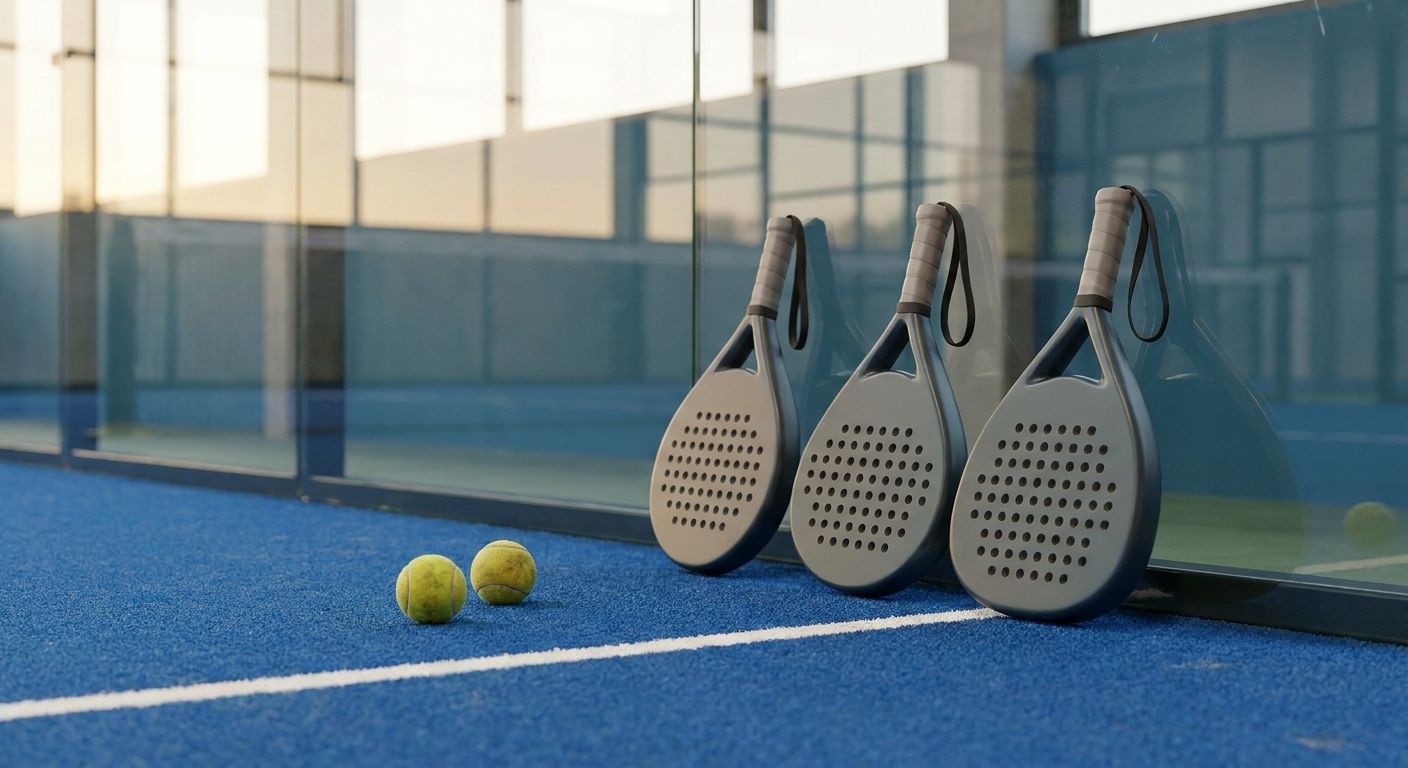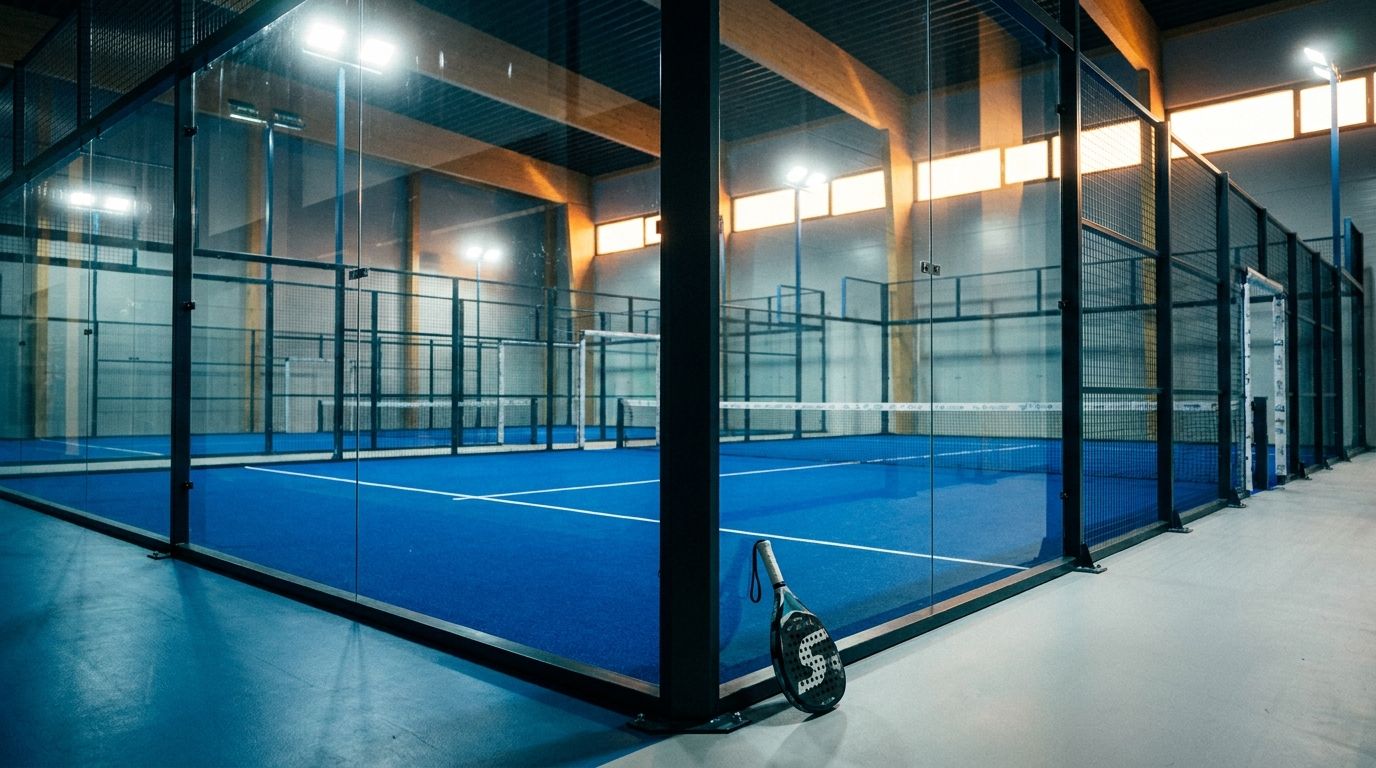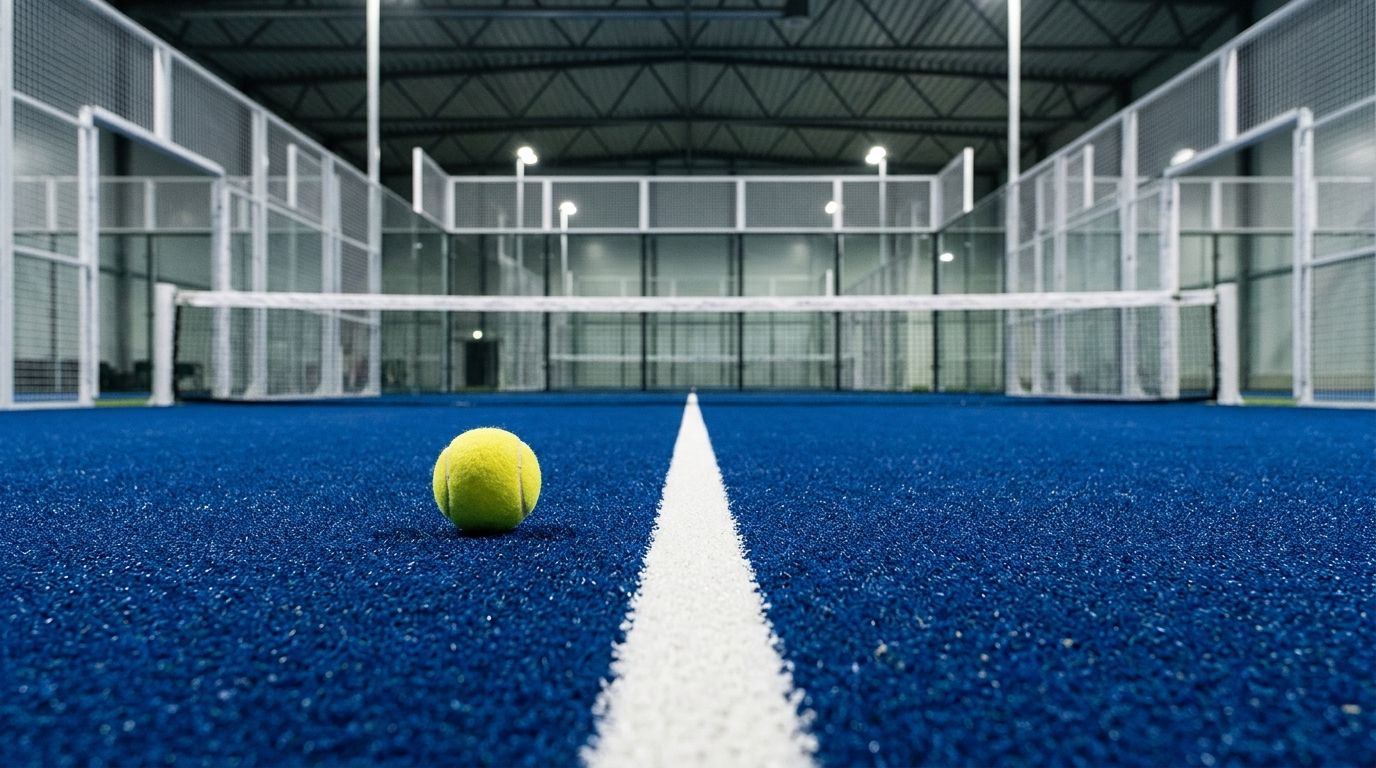
A padel court can look pristine in a booking photo and still play badly. Uneven bounce, slippery turf or glaring lights matter more than fresh paint. A few checks before play tell you a lot.
This guide focuses on what players can actually observe: whether the court plays consistently, feels safe, and is being cared for. It is not a certification checklist. Formal compliance and construction standards are for venue operators and qualified inspectors, but the International Padel Federation’s rules give a useful reference for what the game needs from a surface, walls and lighting.
Start with the surface, not the color
Most players will encounter artificial grass, though FIP rules allow cement, synthetic material or artificial grass if the court provides a regular bounce. The key word is regular. A padel surface should not have obvious humps, loose seams or patches that change the ball’s response without warning.
Walk carefully from the back glass toward the net and across both service boxes. Does the turf feel broadly similar underfoot? Are there bald or dark areas, lifted edges, or places where the fibers lie flat? Color variation may be cosmetic; a wrinkle or raised seam is a trip hazard to report.
FIP rules call for a regular bounce and level differences under 3 mm across a 3-metre straightedge. That technical measure explains why visible ripples deserve attention. The court should also drain properly. After rain, standing water or a persistently slick patch can make movement unpredictable. Do not assume every wet surface is safe just because a booking is available.
Sand is part of the playing surface
On sand-filled artificial turf, the infill is not decoration. It supports the fibers and helps shape grip and movement. You are looking for an even playing feel, not a particular amount of sand visible from the sidelines. Turf systems differ, and operators should follow the surface maker’s instructions rather than copy a one-size-fits-all recipe.
Pay attention to where sand has collected. Heavy ridges along the glass or bare-looking high-traffic areas may signal that it needs redistributing. Compare how your shoes grip when you move from the baseline to the net. A sudden change can make a split step or recovery less predictable.
Regular brushing redistributes infill and prevents fibers matting; schedules depend on use and turf type. As a player, you should not rake or move equipment yourself unless staff ask you to. Flag a visibly uneven surface instead.
Test the bounce before you commit
A few gentle warm-up rallies can reveal more than a long inspection. Hit or drop the ball in several places: near the back glass, the service line, and toward the net. You are not checking whether every rebound is identical—wall angles, ball condition and your own contact all affect it—but watch for a spot that repeatedly produces a strangely low, high or sideways bounce.
Then check the glass. In padel, walls are part of the game, and FIP rules require a uniform, hard, smooth wall surface that gives a consistent rebound. Look for visible cracks, loose-looking panels, damaged seals, or a panel that seems to move. Do not strike questionable glass to test it. Stop and tell venue staff; if a panel appears damaged, do not play until the operator has assessed it.
A recreational court need not be tournament-grade; it should give predictable responses.
Look closely at the glass, fence and entry points
Before starting, take a quick look at the areas players commonly brush past: the gate, corners, net posts and the glass-to-frame joins. FIP rules specify that metal fencing should be flat and vertical, and that joints must not have sharp or pointed edges. That standard exists for a reason: players may slide or reach near the enclosure during a point.
Notice obvious loose hardware, a gate that will not close properly, protruding bolts, or sharp wire ends. Keep your warm-up and bags clear of the playing area, and report anything that could catch clothing or skin. Never try to tighten a fitting or move a panel yourself.
Clean glass also helps you see the ball early. Fingerprints and smudges are normal after play, but grime across large areas can make it harder to judge the ball. That is a comfort issue more than an automatic safety failure, so mention it politely rather than treating every mark as a defect.
Lighting should be even, not merely bright
When playing indoors or after dark, look beyond whether the lights are switched on. Can you follow a high lob from one end to the other without losing it in a dark patch or staring into glare? Are there dark corners, flickering lamps or shadows that cross the service boxes? Uniform light is what lets players, officials and spectators see clearly.
FIP’s rules say artificial lighting should be uniform and positioned so it does not cause visual difficulty. They set a minimum height for projectors and note that new facilities should consider greater clearance; broadcast lighting has separate requirements. Tournament specifications can set more detailed illuminance targets, so do not treat a single lux figure as a universal standard for every recreational venue.
If you struggle to track the ball, pause and tell staff. A quick adjustment to a faulty fixture may be possible; if not, the venue can help decide whether the court is suitable for play. For outdoor sessions, also consider sun angle and contrast. A low sun can make one end uncomfortable even when the court itself is in good condition.
Check the net and court markings
The net is easy to overlook until a ball clips it. FIP specifies a height of 0.88 metres at the center and 0.92 metres at the ends. From the player’s perspective, the useful checks are simpler: is the net sagging, torn, or visibly loose at one end? Are the posts stable and free of exposed sharp edges?
Court lines should be clear and secure. FIP says they should be 5 cm wide, with a contrasting color preferred for visibility. Faded paint can be annoying; peeling or raised tape is more serious if it creates an uneven step or catches a shoe. If a line is hard to see, agree with your group to call close balls consistently, then tell the venue so it can be repaired.
Do not adjust the net unless the venue’s instructions explicitly allow it. Staff can use the correct measurement and avoid damaging the fittings.
A simple two-minute pre-match check
Use this routine before your first point:
- Scan the turf for wrinkles, standing water, bald patches and concentrated sand.
- Check the glass and fence for cracks, loose-looking edges or sharp protrusions.
- Look at the gate, net posts and net tension.
- Under lights, track a high ball from both ends and notice glare or dark zones.
- Hit a few controlled balls to see whether the surface and walls respond predictably.
The point is to catch anything that could affect movement or safety. Report concerns before play so staff can inspect them.
What regular maintenance looks like
Players see the result, not the maintenance routine. A well-run venue removes debris, keeps the playing surface level, redistributes sand where needed, and checks the net and enclosure. A specialist maintenance schedule may also include deeper turf cleaning, drainage checks, inspection of structural fixings and periodic sand top-ups. The right interval depends on traffic, weather, the turf system and the manufacturer’s guidance.
FIP’s promoter manual for sanctioned tournaments says courts should be kept clean, well maintained and safe throughout the competition; turf should be swept and watered when necessary before matches. For everyday clubs, the principle is the same even if the event-specific staffing requirements do not apply: surface care and safety checks are ongoing, not a one-time installation task.
At a regular club, notice whether reported issues are addressed and the court plays consistently. Clear communication and prompt attention to hazards matter more to players than a maintenance log.
When to stop play and report a problem
Some annoyances can wait for the end of the booking: a smudged panel, a faded line, or a light that is slightly dimmer than ideal. Stop immediately for a cracked or moving glass panel, a loose gate, a sharp edge, a lifted seam, a puddle on the playing surface, or lighting so poor that you cannot follow the ball safely.
Tell the venue exactly where the problem is and what happened. Do not continue just because the court is paid for, and do not attempt a repair. If the operator confirms the court is safe or moves your group to another one, you can get back to playing with confidence.
A reliable court is defined not by its photo or price, but by consistent bounce, dependable footing, a secure enclosure and usable lighting. Learn to spot those basics and you can choose better sessions, report problems sooner and focus on playing.