New courts & features every week 🚀 | Missing a court? Email hello@padelmap.net
#58 in Europe · Brussels, Belgium
Stade Roi Baudouin – Koning Boudewijnstadion
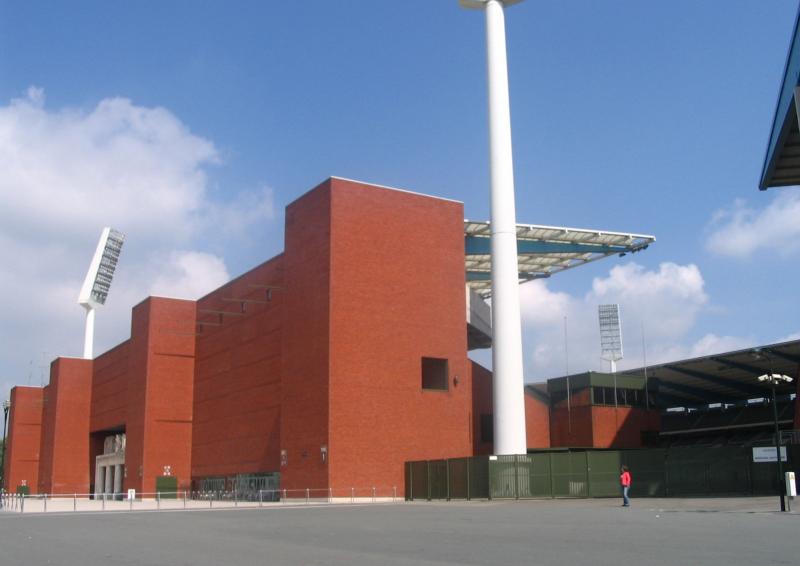
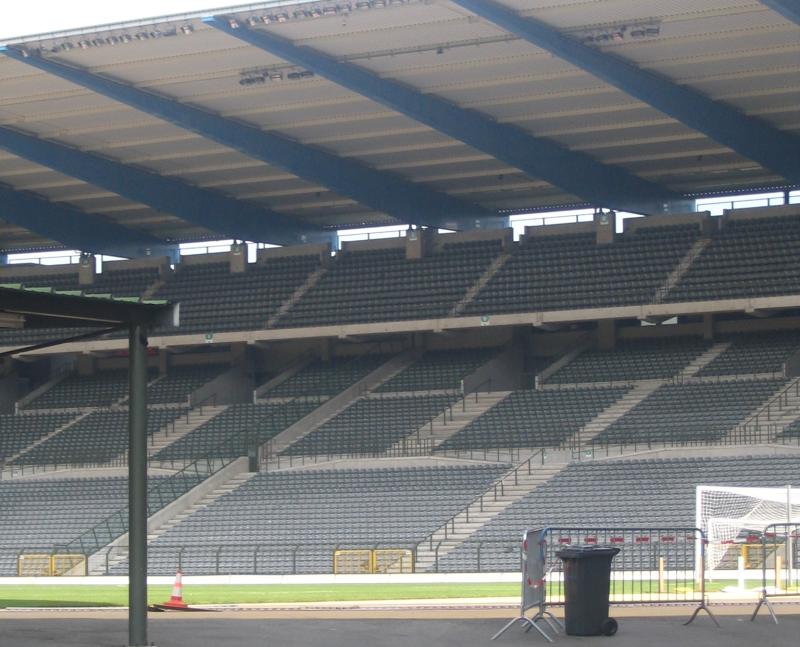
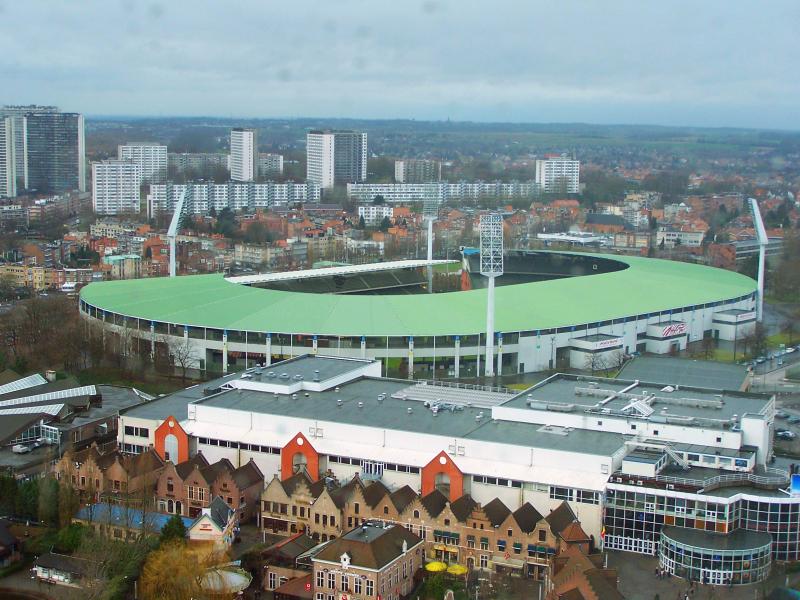
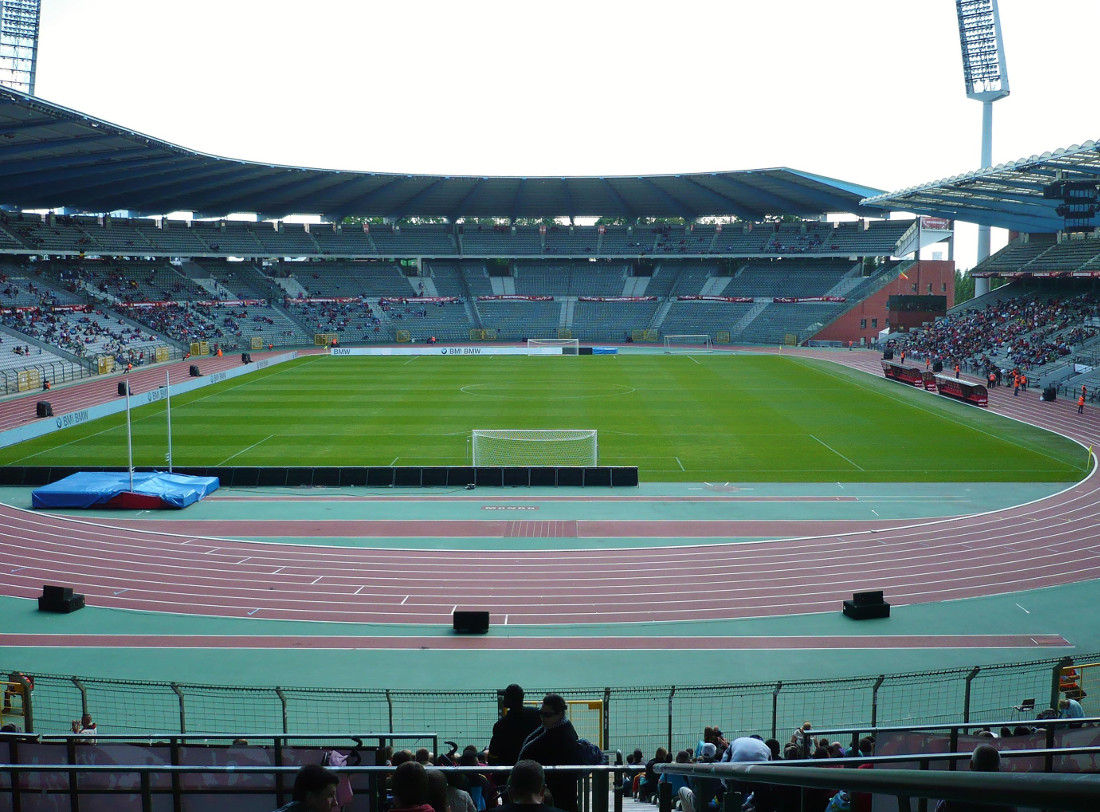
Stade Roi Baudouin (French), Koning Boudewijnstadion in Dutch or King Baudouin Stadium in English, is the biggest stadium in Belgium and the ground where the Belgian national side play most of their home matches.
Building work on the Stade Roi Baudouin, then still called Stade du Centenaire, came forth out of a desire of the city of Brussels to have a stadium that could cater for "every sport". Construction started in 1929 and on 23 August 1930, 100 years after Belgian independence (hence the name Stade du Centenaire), the ground was officially inaugurated.
Three weeks later, on 14 September, and with King Leopold in attendance, a derby between the national sides of Belgium and the Netherlands was the first game played at the ground. The bowl-shaped stadium could hold over 70,000 spectators at that time.
Soon after the Second World War the ground got renamed Heysel Stadium after the local area and the plateau it was constructed on.
The Heysel Stadium underwent its first significant major renovation in 1974, when a new all-seater covered stand got built. In those years the ground regularly staged European cup finals, although by the mid 1980s the state of the ground had severely deteriorated, contributing to the Heysel stadium disaster of 1985.
That year the final of the European Cup between Juventus and Liverpool was to be contested at the ground. An hour before the match English fans started rioting, and when a group of Liverpool supporters charged the Juventus fans, the Juventus fans retreated and were pushed towards a side perimeter wall. Trying to escape by climbing over the wall, the wall collapsed, and 39 people died. Even though the match continued to be played, English teams were subsequently banned from European competitions for 5 years.
It took several years though before the city of Brussels ultimately decided to extensively renovate the ground. This happened in 1994 and at the same time the ground was renamed Stade Roi Baudouin – Koning Boudewijnstadion.
In 2000, Stade Roi Baudouin was the venue for the opening fixture of Euro 2000 along with two more matches in the group stage, a quarter-final, and the semi-final between France and Portugal (2-1).
Apart from the disaster final in 1985, three more European cup finals were played at the ground: the first in 1958 between Real Madrid and AC Milan (3-2), the second in 1966 between Real Madrid and Partizan Belgrade (2-1), and the third in 1974 between FC Bayern and Atlético Madrid (1-1 and 4-0 in the replay).
On top of this the ground staged four Cup Winners' cup finals: the first in 1964 between Sporting and MTK Hungária, the second in 1976 between Anderlecht and West Ham United, the third in 1980 between Valencia and Arsenal, and the last in 1996 at the newly renovated stadium between Paris Saint-Germain and Rapid Wien.
Despite the refurbishment in the 1990s, Stade Roi Baudouin has significantly aged over time and the city of Brussels as a result started to study the possibility of either redeveloping the current stadium or building a new one. In the end, they chose the latter option in partnership with local side Anderlecht.
After a difficult and protracted process, the different parties ultimately came to an agreement by the end of 2015. Building work on the new Eurostadium was expected to start in the summer of 2016 and to be completed in 2019, in time for the Euro 2020 championships, but new delays have thrown doubt on the realisation of the project.
If the Eurostadium gets built, Stade Roi Baudouin is set to be demolished in 2020.
(images of the current Stade Roi Baudouin below)
Stade Roi Baudouin – Koning Boudewijnstadion is situated in the north of the city of Brussels, about 6 kilometres from Brussels' downtown area.
Three metro stations lie within a short walk of the ground: Heysel, Roi Baudouin, and Houba-Brugmann, of which the first two are the closest. They is reachable with line 6 which circulates the centre of Brussels and also passes railway station Gare du Midi (Zuidstation).
Stade Roi Baudouin can be without difficulty reached by car from the Brussels ring road. Take exit 8 (Wemmel) from the northern part of the ring and drive a few hundred metres south. The ground will be on your left.
Address: Marathonlaan 135/2, 1020 Bruxelles – Brussel.
Address: Marathonlaan 135/2, 1020 Bruxelles – Brussel.
Stade Roi Baudouin is part of a complex that includese the renowned Atomium, the Brussels Expo, and is situated near Parc d'Osseghem. Visitors will find also a water park located next to the ground, as well as the Mini-Europe miniature park, though both attractions are arguably more for children.
This does, although, mean that there are quite a few dining and drinks options in the immediate surroundings of the ground. The rest of the area is mainly residential, but it being Belgium, this means that visitors will find always a bar or restaurant near.
There are also a few hotels close to the ground. Alliance Hotel Brussels Expo and Best Western Hotel Expo are both a very short walk away. Hotel Le Centenaire is another option, whereas the Ibis Expo Atomium and Hotel Auberge are conveniently located if you are driving.
Use the linked guides To browse hotels near Stade Roi Baudouin. There is somewhat more variety of hotels in Brussels' downtown area, which is not far away by metro.
Stade Roi Baudouin offers two options for venue tours: a self-guided tour following a route through the ground, or a group tour with a guide.
The self-guided tour is available Monday to Friday from 10:00 a.m. To 5:00 p.m.. Guided tours are available on request. The self-guided tour price is €6.00.
Bookings are required (for both tours) and can be made online. Additional information call +32 (0) 2 474 39 46 or email parcours@prosportevent.be.
- Tour&Taxis Padel Club Brussels
By foot/bicycle: 86c avenue du port-havenlaan. By car: parking Tour&Taxis/Esplanade, drève Anna Boch/av du port 88-1000 Brussels, 1000, Bruxelles, Belgique
- x
x, x, Brussels, Belgium
- kjhvojhv
jh h, 9999, Brussels, Belgium
- padel
Sint Pieters Leeuw, Brussel, België
- Tierra247
Chaussée de Vilvorde 172, 1120, Bruxelles, Belgique
- Padel Club BXL
1 Rue Saint-Norbert, 1090, Bruxelles, Belgique
- Gala padel Academy
Antwerpselaan 1/bus 0003, 1853 Grimbergen, Belgium
- Royal Leopold Club | Tennis, Padel & Hockey
Av. Adolphe Dupuich N°42, 1180 Uccle, Belgium